


A Single Gesture That Triggered a National Debate
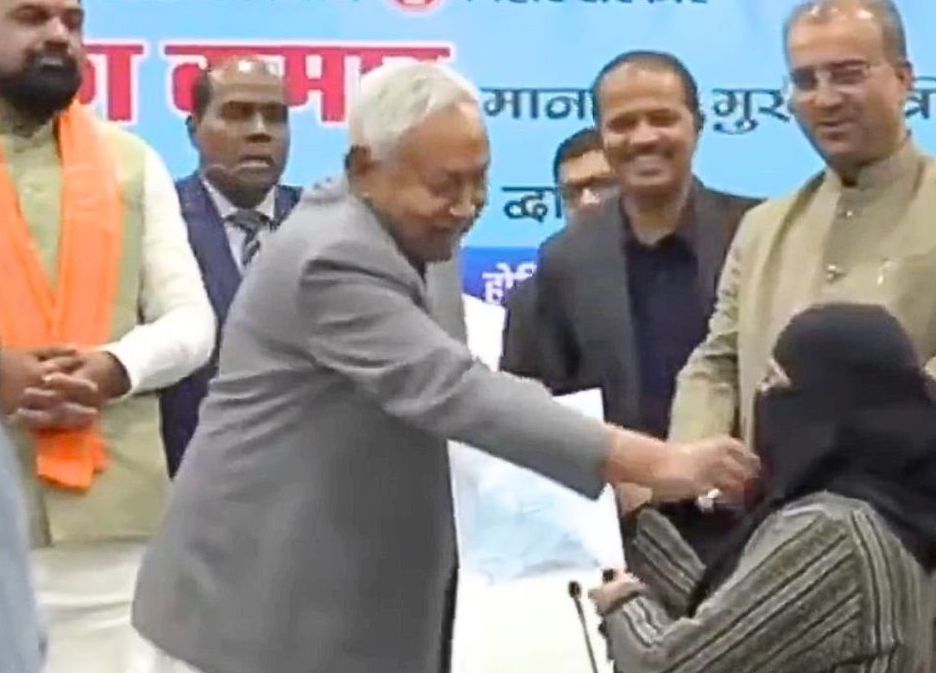
What was meant to be a routine government event in Patna turned into a nationwide controversy within minutes. During an appointment letter distribution ceremony for doctors, Bihar Chief Minister Nitish Kumar was seen pulling down the hijab of a Muslim woman doctor on stage. The short video clip went viral almost instantly — and so did the outrage.
In today’s India, where public conduct, personal dignity, religious freedom, and political accountability are constantly under scrutiny, this incident struck a raw nerve. It wasn’t just about a piece of cloth. It became about consent, power imbalance, respect for women, and boundaries that leaders are expected not to cross.
What Exactly Happened on That Stage
The incident occurred during a formal government function where newly appointed doctors were being felicitated. As the CM handed over the appointment letter to the woman doctor, he allegedly pulled her hijab down so her face would be visible. The doctor appeared visibly uncomfortable, though she did not react publicly at that moment.
That moment — captured on camera — became the center of a massive political and social storm.
Supporters tried to frame it as a “harmless gesture,” while critics saw it as something far more serious: a public violation of personal and religious boundaries by a constitutional authority.
Why This Act Didn’t Sit Well With the Public
The backlash wasn’t random or exaggerated. It was rooted in some very fundamental questions:
- Did the woman consent to this act?
- Does any authority figure have the right to touch or alter someone’s religious attire publicly?
- Would this have been acceptable if roles were reversed?
For many Indians, especially women, the issue was crystal clear: intent does not cancel impact. Even if there was no malice, the act itself crossed a line.
Hijab is not just clothing. For many Muslim women, it represents faith, identity, and personal choice. Removing it — even momentarily — without consent is not “casual,” especially when done on a public stage by someone in power.
Political Reactions: Condemnation, Damage Control, and Deflection
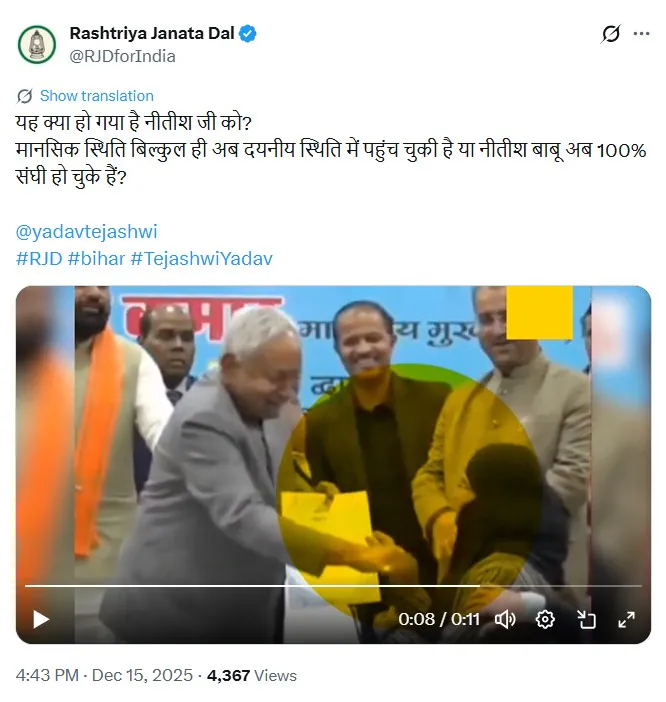
The opposition wasted no time in slamming the Bihar CM. Leaders from Congress, RJD, PDP, and several regional parties called the act “shameful,” “insensitive,” and “humiliating.” Some demanded a public apology, while others questioned whether Nitish Kumar was fit to hold office if such actions were considered acceptable.
On the other hand, JDU leaders rushed to defend him, arguing that the CM treats women like daughters and that there was no ill intention. This defense, however, backfired badly on social media, where users pointed out that paternal intent does not justify ignoring consent.
Meanwhile, political rivals tried to dilute the issue by dragging old videos of other leaders into the conversation — a classic case of deflection rather than accountability.
Social Media: Where the Real Verdict Came From
If courts of law decide legality, social media decided morality.
Platforms like X (Twitter), Instagram, and YouTube were flooded with reactions — many from ordinary citizens, not political loyalists. Women doctors, activists, lawyers, and even neutral viewers expressed discomfort and anger.
Common sentiment online was simple:
“If a common man did this, it would be unacceptable. So why should a CM get a free pass?”
Hashtags demanding accountability trended for hours, proving once again that public figures are no longer judged only by speeches, but by every action caught on camera.
This Isn’t Just About Religion — It’s About Power
Reducing this issue to a “hijab debate” misses the bigger picture. At its core, this controversy is about power dynamics.
When a Chief Minister interacts with a young professional woman on a public stage, the imbalance is obvious. In such situations, silence or lack of protest does not automatically mean consent. This is exactly why leaders are expected to follow stricter standards of conduct, not looser ones.
Public office comes with visibility — and responsibility.
The Larger Question India Is Asking
This incident has forced the country to reflect on a deeper issue:
Do we still normalize uncomfortable behaviour when it comes from people in authority?
Whether intentional or not, the act sent a troubling message — that personal boundaries can be overridden in the name of familiarity, culture, or power.
And that’s where most people drew the line.
Final Thoughts: A Lesson Bigger Than Politics
This controversy could have been avoided with something very simple: respecting personal space and choice.
India doesn’t expect perfection from its leaders, but it does expect basic dignity, sensitivity, and accountability. When those expectations are shaken, reactions are bound to be fierce.
In the end, this wasn’t just a viral clip.
It was a reminder that every public gesture matters — especially when it comes from someone sitting on the highest chair of power.
And India is watching.