


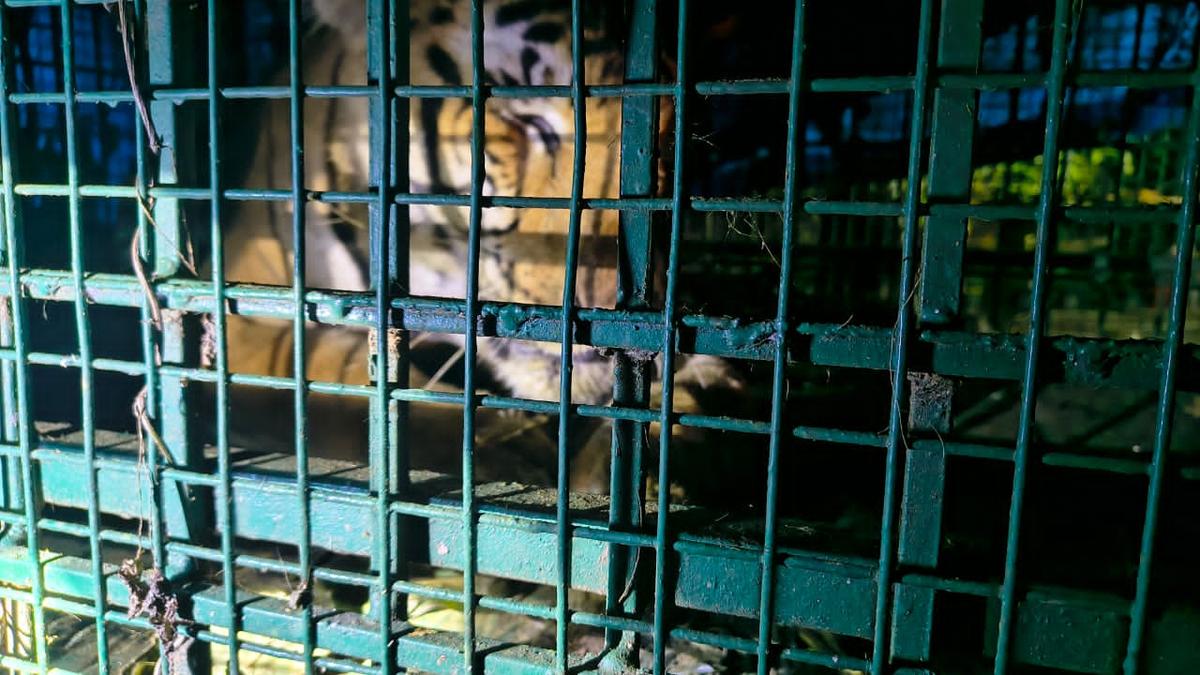
Man-Eating Tiger Trapped in Wayanad
The widespread fear that has gripped the residents of Vandikkadavu in the Wayanad district came to an end early on Friday morning when authorities successfully captured a man-eating tiger that had been terrorizing the area. This significant development follows a tragic week marked by the tragic death of a local tribal leader.
The Capture of WWL 48
The predator, a formidable 14-year-old male tiger known as WWL 48, was lured into a specially designed cage set up by the Forest Department at approximately 1.30 a.m. The capture was the result of extensive efforts by wildlife officials, who had been working tirelessly to ensure the safety of the local community after the recent fatal incident.
A Tragic Incident
This capture comes on the heels of a devastating event that shocked the local community— the killing of Maranaka Kooman, a respected 65-year-old elder and head of the Devargadda Kattunayaka Unnati tribal hamlet. On Saturday morning, while gathering firewood along the picturesque banks of the Kannarampuzha River near the Kurichiyadu forest range, Kooman fell victim to the tiger. He was accompanied by his sister, Kulli, who managed to narrowly escape from the jaws of the ferocious predator.
Response from Authorities
In response to the tragic attack on Kooman, the Forest Department quickly deployed multiple cages around the area and initiated a comprehensive monitoring operation using a network of camera traps. This proactive approach allowed wildlife officials to gather critical data. Through the process of stripe pattern matching, experts confirmed that the captured tiger, WWL 48, was indeed responsible for the fatal attack.
The Future of WWL 48
Given the tiger’s advanced age and its troubling history of human conflict, the Forest Department has made the decision not to release WWL 48 back into the wild. Instead, the large cat has been transported to a specialized conservation and care center located in Kuppadi. There, it will be kept under permanent observation to ensure the safety of both the animal and the surrounding community.
The local authorities hope that this decisive action will restore peace to the affected areas and reassure residents that they are safe from further tiger attacks in the future. The tragic loss of Maranaka Kooman serves as a stark reminder of the delicate coexistence between humans and wildlife in this region.