


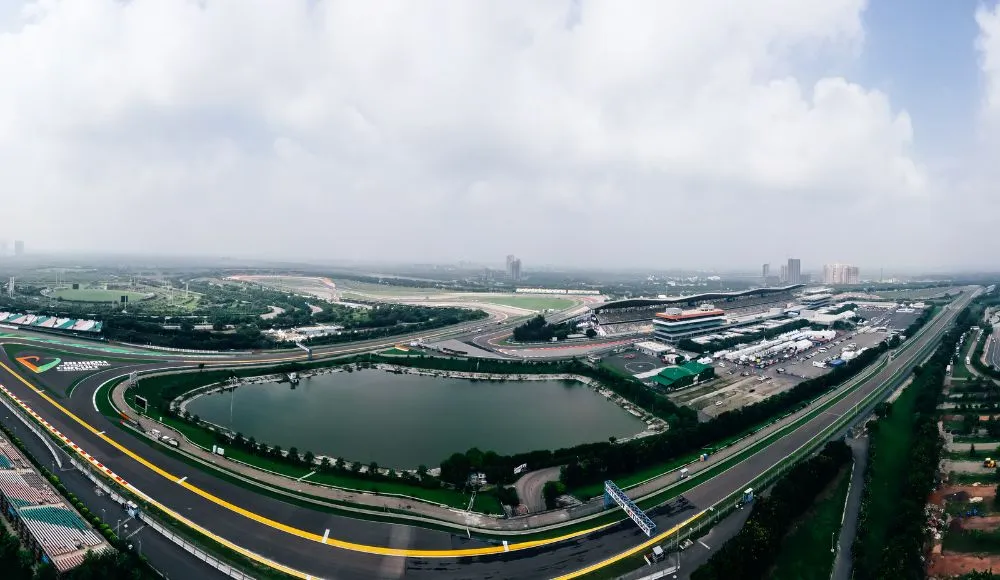
The Buddh International Circuit (BIC) in Greater Noida, Uttar Pradesh, was conceived in 2007 as India’s first Grade-1 motorsport facility. Designed by Hermann Tilke and costing on the order of ₹2,000 crore, it was built on an 874-acre site along the Yamuna Expressway . Construction was completed in 2011, and the track officially opened on October 18, 2011 . In a short span, it became India’s entry on the FIA Formula One calendar.
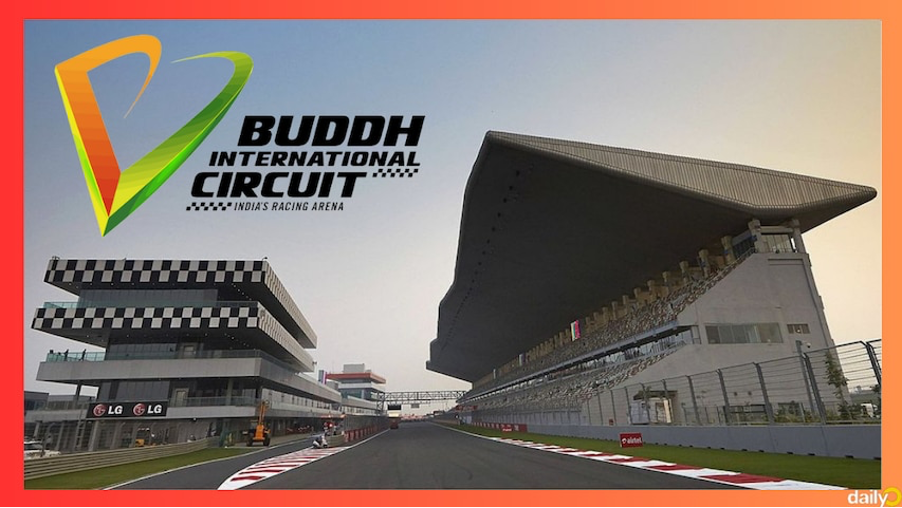
Timeline of Development and Events:
- 2007–2010: The Indian Olympic Association and F1 CEO Bernie Ecclestone agreed (in 2007) to host an Indian Grand Prix. Greater Noida was chosen as the site. Design by Tilke was unveiled in late 2009 . Construction was slated for 2010 but ran into delays, so the opening was pushed to 2011 .
- 2011: BIC debuted with the Formula 1 Indian Grand Prix (October 30, 2011), originally planned for December 2011 but rescheduled after the Bahrain GP was cancelled . Sebastian Vettel (Red Bull) won, setting a lap record. The event drew a capacity crowd (about 100,000) and extensive media attention .
- 2012–2013 (Peak F1 Years): F1 returned in October 2012 and October 2013. Vettel dominated, winning all three Indian races (2011–2013) from pole position . The 2013 race was notable as Vettel secured his fourth Drivers’ Championship at BIC. These years marked the circuit’s peak usage, with additional support races (e.g. MRF Challenge) drawing some domestic interest . However, attendance slipped markedly: initial crowds of ~95,000 in 2011 fell to ~60,000 by 2013 .
- 2014–2016 (Decline and Cancellation): Plans to hold the Grand Prix in 2014 and 2015 were abandoned. The 2014 slot was dropped (a March 2014 date was proposed but cancelled) and by mid-2014 the 2015 race was officially ruled out . The cited reasons were contractual and taxation disputes. Under UP’s then-government, F1 was reclassified as “entertainment” rather than “sport,” voiding prior tax exemptions and imposing heavy state taxes on tickets, team fees and imported equipment . Customs duties on cars and parts were not waived. These policy shifts, combined with Jaypee Sports’ dwindling cash flows, led F1 management to suspend the event indefinitely . Without F1, the circuit only hosted a few smaller races (e.g. an Asia Road Racing Championship round in 2016) .
- 2017–2019 (Financial Crisis and Lease Issues): Jaypee Infratech (owner of BIC) fell into insolvency in 2017. By late 2019, the Yamuna Expressway Industrial Development Authority (YEIDA) cancelled Jaypee’s lease of ~1,000 ha (including the circuit site) for non-payment of dues (on the order of ₹500–600 crore) . The circuit was sealed in early 2020 by authorities to recover these unpaid dues . Jaypee’s projects (including BIC and unfinished sports facilities) became stuck in bankruptcy proceedings.
- 2020–2023 (Post-F1 Activity): The idle circuit saw sporadic domestic racing (track days, truck races, national championships) but no international events. In September 2023, India finally returned to a world motorsport calendar when MotoGP held the “Bharat Grand Prix” at BIC – India’s first premier motorcycle Grand Prix . Despite organizational hurdles (extreme heat, promoter issues), the MotoGP weekend drew over 100,000 spectators, marking the largest motorsport gathering in India since 2013 .
- 2024–2025 (Revival Talks and Cancellations): Following the MotoGP success, the Uttar Pradesh government secured a three-year contract (2025–27) with Dorna (MotoGP’s rights holder) to host future races . However, the 2024 and 2025 MotoGP events were postponed due to “operational considerations” (scheduling, track readiness) and rescheduled only as reserve dates for 2026 . Meanwhile, local officials have courted F1’s return: in late 2023 and 2025, YEIDA and state leaders held talks about bringing Formula 1 back to BIC (targeting a 2025 comeback) . A delegation from Japan’s Super Formula series even inspected BIC in 2025 as a potential venue , indicating broader interest in reviving international racing at the track.
Tax, Policy and Financial Challenges
Several interlocking financial and political factors derailed BIC’s long-term viability:
- Taxation and Legal Disputes: A pivotal issue was the Uttar Pradesh government’s reclassification of the Indian Grand Prix as an “entertainment” event. Under the Akhilesh Yadav administration (starting 2012), previous exemptions on entertainment tax were revoked. The Supreme Court in October 2011 had already ordered promoter Jaypee Sports to deposit the ticket entertainment tax (≈₹24 crore) into a non-lien account . Ultimately F1 was denied the preferential “sporting event” tax status, forcing it to pay heavy state taxes on tickets, sponsor income and fees . A 2017 Supreme Court ruling further held the circuit a “permanent establishment” of F1, making Liberty Media’s Formula One World Championship liable for ~40% income tax on its India revenues . These legal twists not only inflated costs for Jaypee but also meant FOM still owed millions to the promoter . The net effect was a huge tax burden (state and customs duties) that any prospective buyer or promoter would face.
Massive Operational Costs: Staging F1 is extremely expensive. Estimates put a single Grand Prix weekend cost at ₹500–1,250 crore , covering infrastructure, logistics, prize money, licensing fees and promotion. In India’s case, Jaypee Sports shared these costs with sponsors and hoped for government support, but state backing was limited . Lacking tax relief or subsidies, the promoter lost money. Jaypee ultimately wrote off at least $25 million in losses over three seasons . Ongoing maintenance and upkeep of the ₹400 million track also strained finances: by 2016, Jaypee was struggling to fund resurfacing and grandstand repairs amid minimal revenue .
Government Policy and Bureaucracy: Beyond taxes, the circuit suffered from lack of coherent policy support. Unlike other national events (e.g. Commonwealth Games), F1 received no infrastructure grants or administrative facilitation . Bureaucratic hurdles (customs clearance delays for racing equipment, visa processing for foreign teams) added friction . Political priorities shifted: when Mayawati’s government granted a tax waiver in 2011, it was rescinded by her successor Akhilesh in 2013 . Inconsistency in policy (“only one year we are involved, next year a PIL to revoke privileges” as one commentator noted) undercut promoter confidence.- Declining Public Interest: Although initially popular, public appetite for F1 waned. Attendance dropped from ~95,000 in 2011 to ~60,000 in 2013 . Contributing factors included the novelty wearing off, high ticket prices, and an audience more focused on cricket and traditional sports. Media coverage noted that fan enthusiasm “dwindled fast” after 2011 . On-track issues (intense heat during afternoon races without night racing) also impaired spectator comfort. With lower crowds, event revenues and hospitality sales fell, further squeezing Jaypee’s returns.
These factors combined into a self-reinforcing decline. No lasting government–private funding structure was established, and Jaypee’s venture became a tax and financial quagmire. By late 2013, F1 organizers ceased sending technical staff or pursuing the license fee, citing “taxation disputes” with the UP government . In short, BIC’s failure to sustain F1 was driven not by track quality or fans, but by prohibitively high costs, hostile fiscal policy and unstable support .
Post-F1 Usage and Current Status
After 2013, international motorsport nearly vanished from BIC. The track hosted only occasional domestic events (truck racing, amateur series) . In 2016 it saw a one-off Asia Road Racing Championship round, but that too did not lead to a permanent series. With no marquee races, the circuit became largely unused and the facilities began to deteriorate.
In 2020 authorities physically sealed the circuit, citing Jaypee’s unpaid dues . Ownership effectively passed to the Yamuna Expressway Industrial Development Authority (YEIDA). BIC’s role now is largely dormant, aside from ad-hoc private track days or the maintenance of runoff areas. Local media reported that gate closures prevented any commercial use . The site – once a symbol of India’s F1 ambitions – stood empty for years.
MotoGP and Revival Efforts: The major recent activity has been motorcycle racing. The successful MotoGP round in 2023 (the “Bharat GP”) proved that BIC could host world-level events under suitable conditions . The Uttar Pradesh government struck a deal (2025–27) with Dorna to bring annual MotoGP races , investing ~₹160 crore (with ₹100 crore as Dorna fees) for each event . However, operational challenges (extreme heat, scheduling conflicts) have delayed the races: the 2024 and 2025 editions were postponed (now tentative for 2026) . A new tender is underway to select a promoter for future MotoGP events .
Beyond MotoGP, there are exploratory plans to revive global motorsport at BIC. In 2025 a Japanese Super Formula team inspected the track for a potential race, reflecting interest in alternative series . Locally, leaders have begun advocating F1’s return: a UP MLA formally urged Chief Minister Yogi Adityanath in October 2025 to revive F1, citing tourism and jobs . YEIDA officials have confirmed talks with F1 management about a possible 2025 comeback .
Reasons for BIC’s Decline
Key factors behind BIC’s inability to sustain international racing include:
- Unfavorable Tax/Legal Environment: State tax agencies classified F1 as “entertainment,” imposing heavy taxes and revoking earlier exemptions . Imported cars and gear paid duties. Legal rulings (e.g. permanent establishment) further burdened F1 with Indian income taxes . As one analysis put it, “unclear policies, tax confusion” – not lack of fans – drove F1 out of India .
- High Operating Costs: With race-weekend costs of ₹500–1,250 crore , Jaypee had to recover vast sums from ticketing, sponsors and government. But with limited state support or subsidies, the promoter incurred losses (~$25 million over three years) . Even routine circuit upkeep (asphalt resurfacing, safety upgrades) became hard to fund without big events .
- Government Policy Shifts: The abrupt withdrawal of tax relief (e.g. Mayawati to Akhilesh policy change) and lack of coordinated policy support undermined long-term planning. Other projects (Noida airport, expressways) advanced, but motorsport never got similar public–private financing. Bureaucratic hurdles (visa delays, permits) added to frustration.
- Limited Public Engagement: After initial novelty, motorsport remained niche. Attendance and TV ratings were modest by F1 standards, and heavy trackside marketing did not translate to sustained local fan growth . The public’s enduring focus on cricket and lack of grassroots racing development meant there was no fanbase cushion to offset policy or cost shocks.
Together, these factors created a vicious cycle: expensive taxes and costs led to low profitability, which led to event cancellations, which led to idle infrastructure and lost interest. By 2014, F1 teams and organizers deemed India untenable without major reforms .
Current Status (2025) and Future Outlook
As of 2025, the Buddh International Circuit remains under the control of YEIDA/UP authorities, with no scheduled international races. The facility is largely mothballed – its grandstands unused and track runoffs serving only local training events. Financially encumbered by Jaypee’s insolvency and outstanding dues, BIC has not been put up for sale, nor has any new investor stepped in.
However, the environment is cautiously optimistic about revival. The state government views BIC as an asset: the opening of a nearby international airport by 2025/26 and improved road connectivity enhance its potential. Reviving MotoGP (once the promoter issue is resolved) and introducing series like Super Formula could demonstrate the track’s viability . Persistent proposals – like the 2025 “Racing Revival Task Force” involving Jaypee, FMSCI and private investors – indicate rising political will to reactivate the circuit.
For Formula 1 specifically, no firm plans exist yet. F1 organizers and the government would need to renegotiate terms, likely under more favorable national tax regimes (the GST era) . Some experts suggest that if BIC were to upgrade for night racing and secure government backing, F1 could return in a mid-term horizon, but this remains speculative. At present, F1’s global calendar is crowded, and India must resolve its past issues and present secure financing to be a viable host .
In summary, the Buddh International Circuit’s journey has been one of swift rise and abrupt decline. Built as a world-class venue, it hosted three successful Indian GPs, but was undone by fiscal and policy roadblocks. Today the circuit is largely dormant, though MotoGP and other revival efforts keep alive the vision of international racing in India. Whether BIC can truly revive for F1 (or other global series) will depend on political will, financial restructuring, and clearing the legacy tax and debt issues that stalled it.
Sources: Authoritative news and reports on BIC’s history and challenges .