


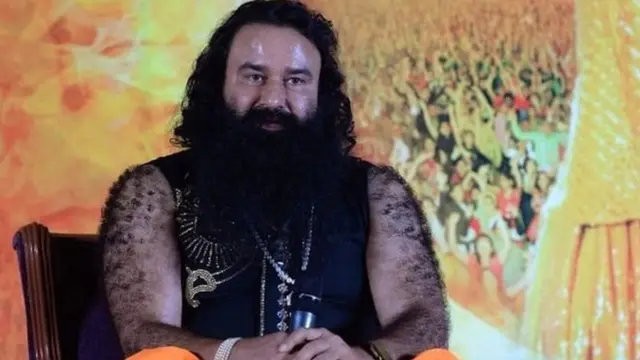
Once again, the release of Gurmeet Ram Rahim Singh on parole has triggered a storm on social media. Predictably, timelines are flooded with angry reactions, sharp criticism, and accusations aimed at the government, the judiciary, and the broader political ecosystem. Opposition leaders and self-declared defenders of democracy have raised alarms, calling the parole “deeply problematic,” “an insult to justice,” and “proof of institutional bias.” At first glance, these concerns appear valid, even necessary, in a healthy democracy where power must always be questioned.
After all, parole for a high-profile convict is never a routine administrative act. It invites scrutiny. It demands answers. It pushes society to ask uncomfortable questions about fairness, equality before law, and political influence. In that sense, the initial outrage on social media and in political circles seems understandable, even responsible.
But as the noise grows louder, it also becomes necessary to pause, step back, and examine whether the outrage is truly about justice—or whether it is selectively manufactured, emotionally charged, and politically convenient.
The Immediate Narrative: Power, Privilege, and Politics
The dominant narrative being pushed online is simple and effective: a powerful religious figure is being repeatedly released on parole due to political patronage. Hashtags trend, old headlines resurface, and the issue is framed as a clear-cut case of the system bending for the influential.
Opposition parties and left-leaning commentators argue that if an ordinary prisoner had sought similar relief, the response would have been very different. They question the timing of the parole, link it to elections, and suggest a tacit understanding between the state and the Dera. These arguments resonate easily with an audience already skeptical of authority.
Yet, what is striking is how quickly nuance disappears in this conversation.
What Parole Actually Is—And What It Is Not
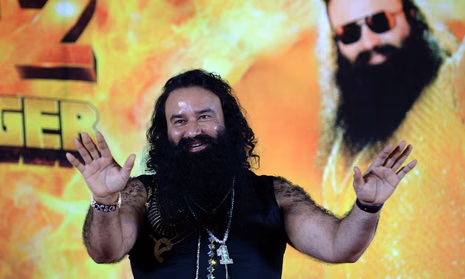
One uncomfortable fact rarely highlighted in viral posts is that parole is not an acquittal, nor is it a pardon. It is a legal provision available within the Indian prison system, governed by rules, eligibility criteria, and administrative oversight. Thousands of prisoners—many of them unknown, powerless, and politically irrelevant—are released on parole every year across states for reasons ranging from family obligations to medical needs.
The law does not state that parole is reserved only for those who fit a particular ideological comfort zone. It also does not say that unpopular individuals lose all legal rights by virtue of public anger. Justice, by definition, cannot operate on emotions or social media sentiment.
If the argument is that parole itself is flawed, then the debate should be about reforming the parole system as a whole—not about demonizing one individual while ignoring the same relief granted to others.
Selective Outrage and the Memory Hole
A deeper look reveals a pattern that is hard to ignore. Several convicts with political affiliations, ideological backing, or social legitimacy have received paroles, furloughs, or sentence suspensions in the past. Many of these cases passed with limited outrage, or were even defended as “humanitarian” decisions.
Why then does Gurmeet Ram Rahim’s parole alone become a symbol of democratic collapse?
The answer perhaps lies not in the act itself, but in who controls the narrative. Gurmeet Ram Rahim is an easy target—controversial, polarizing, and widely disliked in elite discourse. Defending his legal rights does not earn social approval. Attacking him, however, guarantees virality.
This is where the conversation quietly shifts from justice to politics.
The Silent Followers No One Talks About
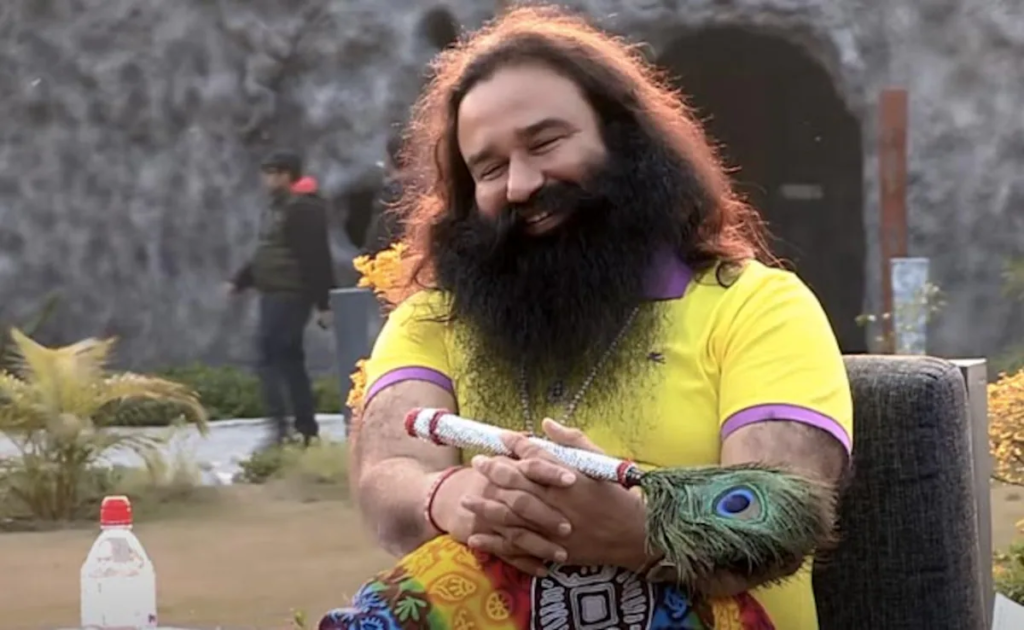
Another aspect conveniently ignored is the existence of millions of followers associated with Dera Sacha Sauda. Regardless of what critics think of them, these individuals exist, vote, and live within the same constitutional framework. For many of them, Gurmeet Ram Rahim is not just a controversial figure on Twitter but a spiritual guide whose teachings they associate with de-addiction, social service, and community discipline.
When parole is granted, these followers see it not as a political favor but as a lawful, temporary relief given under rules that apply to all prisoners. Their voices rarely trend, partly because they do not dominate English-language media spaces or elite social networks.
Dismissing them entirely as “blind followers” may feel morally satisfying, but it also reveals an uncomfortable elitism in public discourse.
Rehabilitation vs. Retribution
Modern criminal justice systems globally wrestle with a fundamental question: Is the goal only punishment, or also rehabilitation? Parole, furlough, and remission are built on the assumption that controlled reintegration and humane treatment are part of long-term societal stability.
Ironically, many who oppose Gurmeet Ram Rahim’s parole also strongly advocate prison reforms, human rights of inmates, and dignity for convicts. Yet, when it comes to a figure they dislike, the language shifts from reform to permanent moral exile.
This contradiction weakens the moral authority of the outrage.
The Political Utility of Anger
There is also a clear political incentive to keep this issue boiling. It offers the opposition a rallying point, a distraction from governance failures, and a moral high ground that requires little policy substance. Social media amplifies this because anger performs better than analysis.
In this environment, any attempt to introduce balance is immediately labeled as “support,” “apologism,” or “propaganda.” Rational discussion becomes collateral damage.
A Hard Truth for Democracy
Defending the rule of law means defending it even when it benefits those we dislike. If parole rules were violated, the debate should focus on evidence, legal challenges, and institutional accountability. If rules were followed, then personal disgust cannot be the basis for denying someone a legal provision.
Gurmeet Ram Rahim’s parole does not weaken democracy by itself. What weakens democracy is the insistence that laws should bend according to ideological comfort, online trends, or political alignment.
Conclusion: Beyond Black and White
The mixed reactions on social media reveal less about Gurmeet Ram Rahim and more about the fragility of public discourse. It is easy to shout, trend, and condemn. It is harder to accept that democracy often protects rights we do not emotionally support.
One can criticize Gurmeet Ram Rahim, question his influence, and still acknowledge that parole—when granted under law—is not an injustice by default. The moment we demand exceptional punishment for exceptional dislike, we step onto a slippery slope.
In the end, the real test is not whether parole makes us uncomfortable—but whether we are willing to uphold legal principles even when doing so earns us no applause.