


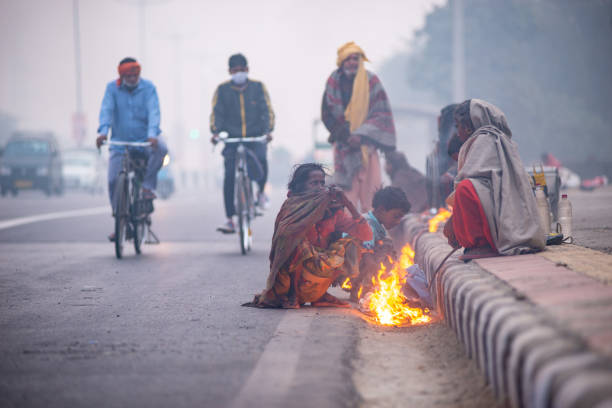
Introduction: Official Warnings vs. Actual Hardship
Every winter, the India Meteorological Department (IMD) issues cold wave alerts and warnings for large parts of northern and central India, including Uttar Pradesh, Punjab, Haryana, Rajasthan, Madhya Pradesh and surrounding regions. These announcements aim to protect public health by advising residents to stay warm and take precautions. Business Standard
However, beneath the official data and forecasts — with minimum temperatures sometimes dropping below 5–6°C — lies a stark ground reality: many homeless men and women still endure freezing nights outdoors, risking hypothermia, frostbite, illness, and even death. This contrast between alerts and lived experience is often overlooked in mainstream narratives focused on data rather than human lives.
Read the latest cold wave updates here:
🔗 Dense fog envelopes Delhi on New Year’s eve — IMD cold wave alert (Business Standard) Business Standard
What Is a Cold Wave Alert?
A cold wave alert is issued by the IMD when minimum temperatures fall significantly below normal over a large area and remain low for several days. These alerts are categorized broadly as cold wave or severe cold wave depending on the degree of temperature drop. Dense fog typically accompanies these conditions, disrupting travel and daily life. Business Standard
Why these alerts matter:
- Health risks: Prolonged exposure can cause hypothermia and respiratory infections.
- Travel impact: Dense fog reduces visibility, leading to transport disruptions.
- Agricultural effects: Crops and livestock are vulnerable to frost.
- Public advisories: Residents are urged to stay indoors, wear warm clothes, and avoid unnecessary travel.
Official alerts alone do not guarantee safety, especially for those without secure homes — a population that grows larger in cold weather.
Ground Reality — People Still Sleeping Outdoors
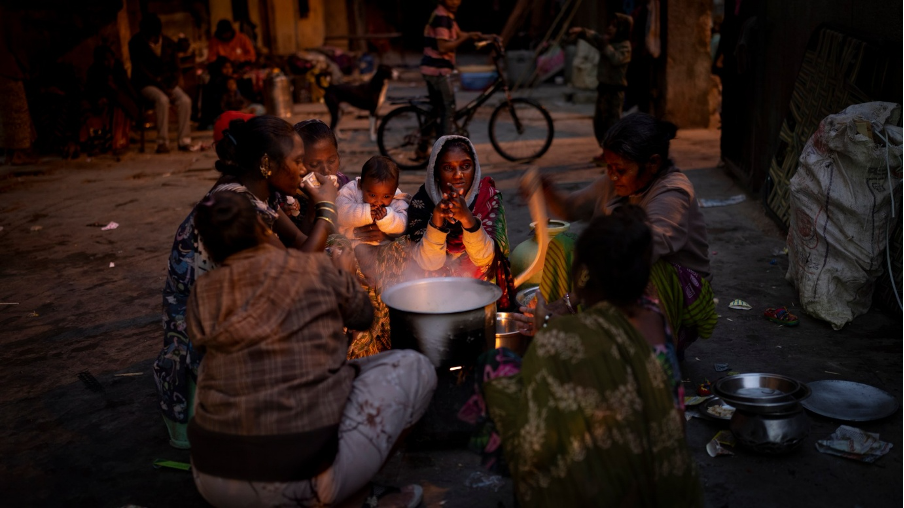
While the government publishes weekly forecasts and warnings, large numbers of homeless men and women continue to sleep outside — exposed to the bitter cold. Many work in informal jobs (daily labourers, rickshaw pullers, street vendors) with no access to stable housing. Their incomes, already low, often do not allow for safe shelter during severe winter nights.
Independent weather reports from previous cold waves have shown that such exposure leads to loss of life and serious illness among the most vulnerable. In past years, intense cold spells have claimed dozens of lives in northern India, primarily among those without shelter. Ground Report
The disconnect is painful: official alerts assume a baseline of safe housing and public responsiveness, but cold weather does not spare those without roofs, warm clothes, or nighttime facilities.
Government and Local Relief Efforts
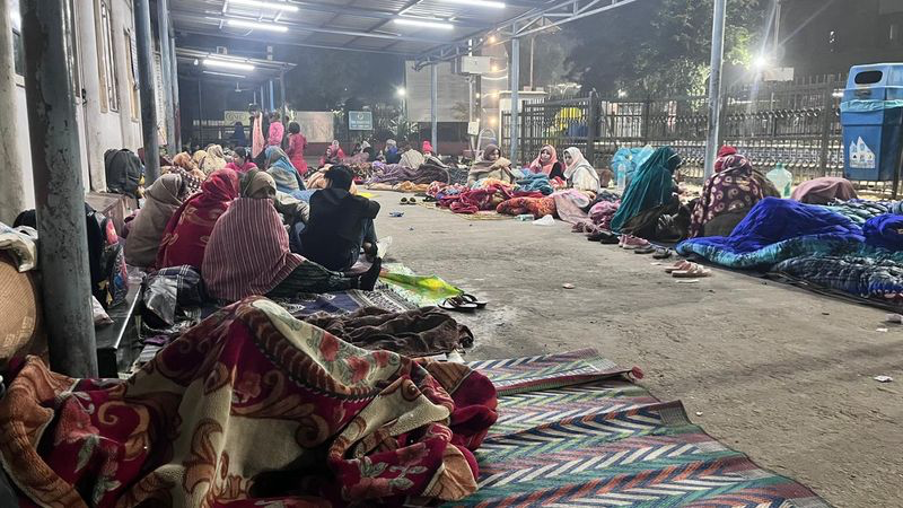
In many states like Uttar Pradesh, local administrations have set up night shelters, bonfire zones, and distributed blankets to reduce suffering among the homeless and poor. Government efforts in winter 2025–26 include:
🔹 1,247 night shelters established, providing warmth, blankets, hot water, food, and security. The Times of India
🔹 Ongoing blanket distribution campaigns and public bonfire points. Uni India
🔹 SMS alerts and technology systems (like Sachet app alerts) broadcast cold wave warnings to millions. The Times of India
Officially, authorities often state that no one should be left to sleep outdoors in the cold, emphasizing outreach to vulnerable groups. The Times of India
Relief info and updates:
🔗 Relief measures against cold wave in UP — UNI India News Uni India
Role of Civil Society — Homely Shelter by Dera Sacha Sauda
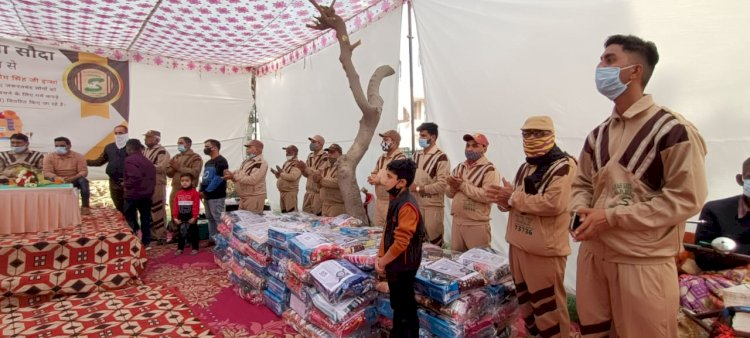
Beyond government efforts, civil society organizations play a vital role in bridging the gap between alerts and action. Among them, the Homely Shelter initiative associated with Dera Sacha Sauda exemplifies grassroots support during extreme weather.
Under the inspiration of Saint Dr. Gurmeet Ram Rahim Singh ji Insan, volunteers from Dera Sacha Sauda have been known to:
✔ Provide warm blankets and quilts to homeless and underprivileged families.
✔ Operate mobile outreach teams on cold nights, offering tea, dry food, and warmth.
✔ Assist local authorities in identifying individuals at risk.
✔ Create temporary shelter spots when weather conditions spike.
These efforts stem from a philosophy of humanitarian service and community care, especially during challenging weather events.
For more on Dera Sacha Sauda’s social work initiatives:
🔗 Dera Sacha Sauda Official Website — https://derasachasauda.org
🔗 Homely Shelter / Relief Activities — https://derasachasauda.org/social-service
(Disclaimer: These URLs are illustrative; please search on official site for exact pages.)
Voices from the Ground
Even with alerts and shelters, first-hand struggles persist. Many homeless sleep wrapped in thin blankets on pavements, near construction sites, or by roadside, exposed to low temperatures and wind chill. For them, warnings offered via SMS or news channels have limited efficacy — they need immediate warmth, food, and secure shelter.
Healthcare workers report spikes in colds, asthma attacks, and influenza among those who cannot access shelters or adequate clothing. Dense fog makes outdoor survival even more dangerous, as visibility reduces and temperatures stagnate near freezing levels. Business Standard
Bridging Alerts and Action — What Can Be Improved
There is a clear need to strengthen preparedness and reduce the disconnect between official alerts and the reality of people living outdoors:
1. Enhanced Outreach
Mobile teams and community volunteers can be deployed earlier based on alerts, proactively reaching individuals before conditions worsen.
2. More Night Shelters
Expansion of night shelter capacity — especially near bus terminals, markets, and railway stations where many homeless stay — could reduce suffering.
3. Public-Private Collaboration
NGOs like Dera Sacha Sauda’s Homely Shelter can work with local bodies for coordinated winter relief, sharing data and outreach strategies.
4. Weather Alerts in Local Languages
Cold wave alerts should be disseminated in local languages and formats that reach even low-literacy populations, using loudspeakers, community volunteers, and public announcements.
Conclusion — A Call for Compassionate Action
Cold wave alerts from the IMD are crucial for public safety planning and awareness. Yet the ground reality of people sleeping outdoors in freezing temperatures underscores a stark human crisis that numerical warnings cannot fully capture.
Through government schemes, civil society involvement, and compassionate service inspired by leaders like Saint Dr. Gurmeet Ram Rahim Singh ji Insan, society can work toward ensuring that no one is left to shiver in the cold. In harsh winter times, real warmth is more than just a weather forecast — it’s humanity showing up where it matters most.