


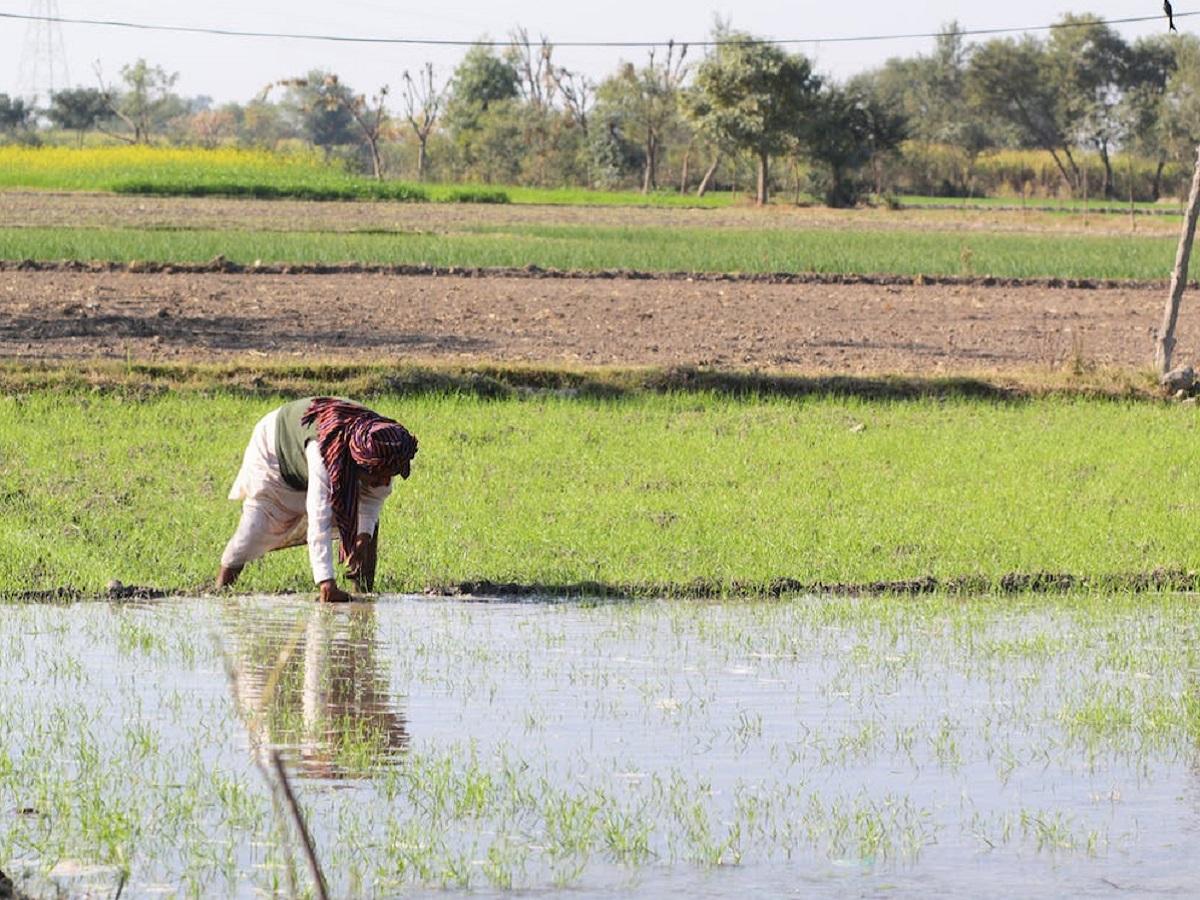
Water scarcity has emerged as one of the biggest challenges facing agriculture in Punjab. Although the state covers only a small portion of India’s geographical area, its contribution to the national food basket has been enormous. This success, however, has come at the cost of rapidly depleting groundwater resources.
Experts stress that efficient water management during the Kharif season is now critical to sustaining crop productivity and safeguarding Punjab’s agricultural future.
Punjab’s Water Situation: Why Conservation Is Urgent
Punjab’s dominance in rice–wheat cultivation has led to excessive extraction of groundwater. The number of tube wells has increased dramatically over the decades, pushing farmers to draw water from deeper and older aquifers.
Recent assessments show:
- Nearly 79% of Punjab’s area is over-exploited
- Groundwater extraction exceeds 160%
- Agriculture accounts for about 95% of total water use
With demand far exceeding recharge, experts warn that traditional irrigation practices are no longer sustainable.
Paddy Cultivation: Smarter Irrigation, Same Yield
Paddy alone consumes more than 80% of irrigation water during the Kharif season. To reduce water use without compromising productivity, experts recommend:
- Prefer short- and medium-duration paddy varieties
- Avoid long-duration varieties that require 15–20% more water
- Sow nursery after May 20 and transplant between June 20 and July 10
- Maintain standing water only for the first 15 days after transplanting
- Follow alternate wetting and drying (AWD) irrigation thereafter
- Stop irrigation two weeks before maturity
Direct seeded rice (DSR) can further reduce irrigation demand by 10–20%, especially when combined with raised beds.
Cotton: Efficient Irrigation in Water-Stressed Areas
Cotton is mainly grown in south-west Punjab, where rainfall is limited and groundwater quality is often poor.
Water-saving practices include:
- Growing cotton on ridges and irrigating through furrows
- Applying the first irrigation 4–6 weeks after sowing
- Avoiding moisture stress during flowering and boll formation
- Ensuring proper drainage to prevent waterlogging
- Using surface or sub-surface drip irrigation, which saves water and nutrients while maintaining yields
Maize: Timely Water at Critical Growth Stages
Maize generally requires 4–6 irrigations, depending on rainfall.
Key recommendations:
- Sow maize in trenches or on raised beds during hot months
- Ensure adequate moisture during pre-tasselling, silking, and grain-filling
- Prevent waterlogging, especially at early growth stages
- Use paddy straw mulch to conserve soil moisture and suppress weeds
Fodder Crops: Light but Regular Irrigation
Fodder crops such as sorghum, maize, and bajra require:
- Timely irrigation based on rainfall
- Irrigation after every cut in multi-cut fodder crops
- Efficient drainage during monsoon to avoid crop damage
- Straw mulching for improved moisture retention in early growth stages
Pulses: Minimal Irrigation, Maximum Efficiency
Pulses are relatively water-efficient crops:
- Moong and mash usually do not require irrigation during monsoon
- Arhar and soybean need 3–4 irrigations depending on rainfall
- Avoid late irrigation in arhar to prevent delayed maturity
- Raised-bed planting helps conserve water and protects crops from excess rainfall
Improving Overall Water Use Efficiency
Experts also recommend:
- Laser land leveling for uniform water distribution
- Underground pipelines or lined channels to reduce conveyance losses
- Smaller field plots for better irrigation control
- Mulching and micro-irrigation to enhance water-use efficiency across seasons
Conclusion
Water-saving techniques are no longer optional for Punjab’s farmers—they are essential. By adopting crop-specific irrigation strategies and modern water management practices, farmers can protect groundwater resources while maintaining stable yields.
Making every drop count today will ensure a secure and productive future for Punjab’s agriculture.