


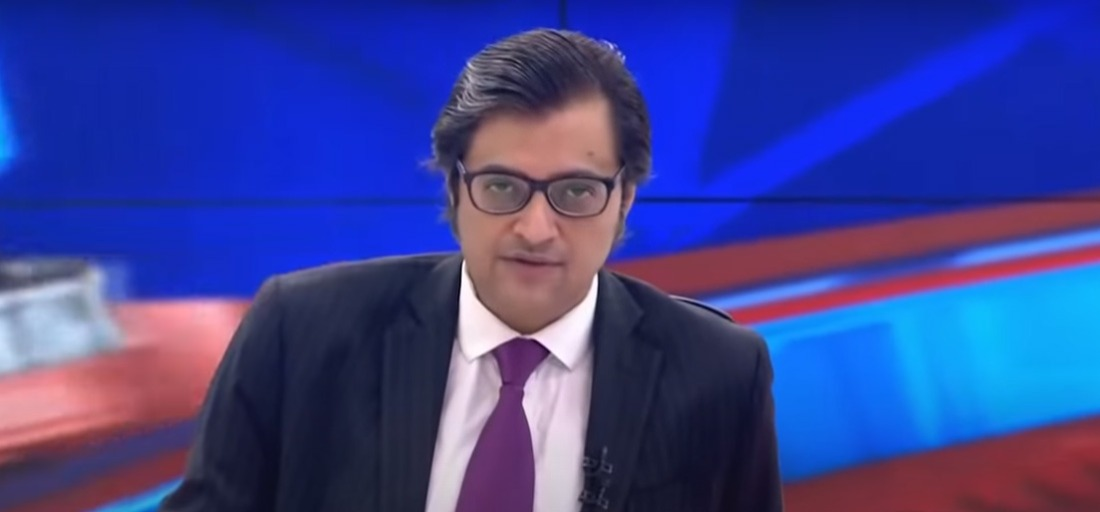
The internet broke on December 29, 2025. Not because a celebrity got married. Not because a cricket match went viral. But because Arnab Goswami—the man who once screamed “Modi, Modi” at the Republic Summit like an enthusiastic BJP campaign worker—suddenly started asking the government uncomfortable questions about pollution, environmental destruction, and corporate favouritism. Welcome to Arnab 2.0: the edition where India’s most high-decibel, power-friendly anchor allegedly discovered what journalism is supposed to be.
And India cannot stop talking about it.
The Unthinkable: India’s “Modi-Friendly” Anchor Becomes Modi’s Critic
For the better part of seven years, Arnab Goswami has been the media figure most synonymous with the Modi government. Not because he was explicitly told what to do, but because his editorial choices, his interview selections, his framing of national issues—all seemed to follow a familiar rhythm that benefited the ruling party. He was, to use a term that’s become uncomfortably common in Indian media discourse, a practitioner of “narrative journalism” that served power rather than interrogated it.
Then, something shifted.
In the last week of December 2025, Arnab announced “Campaign Journalism” as his new editorial mandate. Suddenly, Republic TV’s evening shows featured him grilling government ministers on why the Aravalli hills were being destroyed despite Supreme Court orders. He questioned why IndiGo was allowed to cancel thousands of flights despite massive electoral bond donations. He called out the Modi government by name for failing to keep its manifesto promises on pollution control. He even took shots at BJP leaders’ extravagant weddings—one Delhi bureaucrat’s son’s wedding that reportedly cost Rs. 70 lakh just on firecrackers while Delhi residents gasped for oxygen.
The reception was intoxicating: his TRP numbers spiked. Clips went viral. Supporters cheered “finally, real journalism!” Critics immediately asked: “What’s the catch?”
Because in modern Indian media, nothing is innocent. Everything is calculated.
The Trigger: When High Ratings Met High Principles
What actually changed? According to conversations with media insiders who spoke to Newslaundry and News Minute, the catalyst was prosaic: the IndiGo flight cancellation crisis in December 2025.
IndiGo, India’s largest airline, cancelled thousands of flights due to an IT glitch. Passengers were stranded. Anger was high. And here was the crucial observation: no major television channel was aggressively covering the story.Why? Because IndiGo, like most large corporations, has significant advertising relationships with most major media outlets. Questioning IndiGo might mean losing those advertising contracts.
But Republic saw an opportunity. They went all-in. Arnab attacked the airline. He questioned the government’s relationship with IndiGo. He asked why a company with massive corporate bond relationships could hold India’s aviation sector hostage. The gamble paid off spectacularly: TRP numbers jumped sharply. Ad rates nudged upward. The feedback loop was complete: confrontational journalism sells, even when it’s directed at institutions close to power.
Once Republic proved that attacking powerful institutions could drive ratings and revenues, the editorial playbook shifted. Aravalli hills. Delhi pollution. Lavish displays by BJP leaders. Unnao rape case bail decision. The issues became secondary to the metrics—TRP numbers, viral clips, social media engagement, advertiser interest.
This is the uncomfortable truth that explains “Arnab 2.0”: It’s not a conversion to principled journalism. It’s a pivot to profitable journalism.
The Business War: When Corporate Competitors Changed the Game
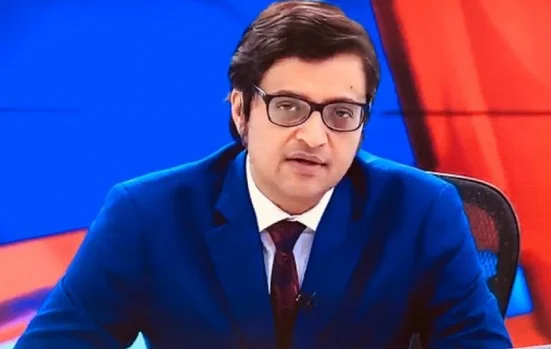
But there’s a deeper layer to this story, and it explains why the timing matters so much.
In 2022, Gautam Adani’s Adani Group acquired NDTV, one of India’s oldest and most respected English news channels. Suddenly, Republic TV—which had dominated the English news space—faced a formidable competitor with deep pockets, management bandwidth, and aggressive expansion plans. NDTV began offering advertising packages that undercut the market. It began poaching talent from Republic and other channels. It had resources that independent channels couldn’t match.
At the same time, Arnab Goswami had been one of Adani’s fiercest public defenders. During the Hindenburg short-seller report controversy that attacked Adani Group companies, Arnab had pushed back aggressively against critics. But now, with Adani competing directly against Republic, that equation had shifted.
Enter the Aravalli coverage. Republic’s aggressive investigation into illegal mining in the Aravalli hills, with implications of corruption and corporate malfeasance, served multiple purposes: it generated viral content, it established Republic as an “anti-establishment” challenger, it attracted advertiser interest in high-engagement content. And—importantly—it created distance between Republic and certain corporate interests.
The game had changed. And Arnab 2.0 was born from competitive necessity, not moral awakening.
What Arnab Says (And What It Actually Means)
When confronted in a live “Ask Me Anything” session about his sudden government criticism, Arnab offered a defense that has become the official narrative:
“It’s not about being pro-government or anti-government. It’s about being pro-people. Unless you campaign, this country won’t change. If you don’t raise your voice, you won’t be heard. Journalism needs a purpose. I strongly feel that the scrutiny of the people is most important.”
This is technically true and strategically brilliant. By reframing his shift as “pro-people” rather than “anti-government,” he protects himself from accusations of flip-flopping while also appealing to a genuine hunger in Indian media for channels that aren’t explicitly partisan. He’s not saying “the government is bad”—he’s saying “the people deserve accountability.”
The problem? His selective application of this principle. During Republic’s “Relive 2025” year-end special on December 30, while discussing Bengal elections, Arnab expressed analytical interest in whether the BJP could win 70% of the Hindu vote. He discussed communal voting patterns with the granularity of a political analyst working for a political party, not a neutral journalist.
He’s still doing narrative journalism—it’s just that the narrative has shifted from “Government is Great” to “Government Should Listen to People, But Mostly on Issues That Drive TRP.”
The Uncomfortable Questions About Media Independence
Here’s what keeps newsroom conversations alive about Arnab 2.0: the questions it raises about Indian media’s fundamental structures.
If aggressive, confrontational journalism only becomes profitable and sustainable when it drives TRP, what does that say about media outlets’ commitment to covering less-popular but equally important stories? If Arnab suddenly questions the government when there’s public anger and no other channel is owning the narrative, what about those stories where public anger hasn’t yet crystallized, or where institutional accountability is needed but viewers aren’t yet engaged?
If editorial decisions are driven by competitive positioning against rival media groups, how independent is any of this journalism? Arnab’s coverage of Aravalli destruction might be correct and important—but if the real motivation is to outflank NDTV’s corporate positioning, isn’t the journalism’s independence compromised at its root?
And perhaps most troublingly: if a channel can suddenly shift from appearing pro-government to appearing anti-government based on TRP calculations and competitive necessities, what does that say about the credibility of either position?
Newslaundry’s assessment is scathing: “The notion that Goswami has gone rogue isn’t entirely true, and his recent pivot must be examined with greater skepticism.” And when you examine the record—his enthusiastic endorsement of Modi in March 2024, his years of soft coverage of the government, his selective outrage that follows ratings opportunities—the skepticism seems warranted.
Why Arnab 2.0 Matters (Even If It’s Calculated)
And yet. And yet.
Even if Arnab’s motivation is primarily commercial rather than principled, does that make the journalism less valid?
The Aravalli hills are genuinely being destroyed. That’s a documented fact. Delhi’s air pollution is genuinely hazardous. That’s measurable. The Unnao rape survivor is genuinely in danger and the bail decision was genuinely controversial. That’s lived reality. IndiGo’s monopolistic behavior was genuinely harming ordinary travelers. These issues didn’t suddenly become important because Arnab decided to cover them—they were always important. Some other journalist would eventually cover them. Arnab just covered them first, when it was ratings-friendly to do so.
In a media ecosystem where most channels are explicitly partisan (either pro-government or pro-opposition), a channel that’s purely motivated by TRP might accidentally serve journalism better than a channel explicitly serving ideology.At least with TRP-driven coverage, the public can see the pattern—follow the profits, find the story. With ideology-driven coverage, the manipulation is more insidious because it’s dressed in principle.
The Larger Pattern: Media as Reflection of Power Dynamics
What makes “Arnab 2.0” trend globally isn’t that Arnab changed. It’s that his change *reflects the shifting power dynamics in India’s media ecosystem, politics, and corporate landscape.*
The fact that a channel would suddenly become confrontational with the government it had supported suggests that the government’s capacity to reward media loyalty might be weakening. Or that competitive pressures are now stronger than patronage incentives. Or that in 2025-26, there’s sufficient public anger on specific issues that channels can profit from harnessing that anger rather than suppressing it.
It’s a sign of a media ecosystem in transition—not toward principled independence, but toward a more complex equilibrium where multiple forces (government pressure, corporate interests, competitive necessity, audience demand, TRP metrics, advertiser preferences) are all pulling in different directions.
The Real Question
When you strip away the noise, the viral clips, the trending hashtags, and the newsroom gossip, the real question isn’t “Did Arnab genuinely change?” (He probably didn’t, in any meaningful way). The real question is: “In an ecosystem where almost all incentives are misaligned with the public interest, can we still get journalism that happens to serve the public good, even if by accident?”
Arnab is covering the Aravalli destruction because it drives TRP, not because he cares about ecological conservation. But the destruction is still being documented. Viewers are still being informed. The government is still being questioned on national television. Something that looks like journalism is still happening, even if the motivation is commercial rather than principled.
That’s not a ringing endorsement. But in January 2026 India, where media independence is increasingly precarious and institutional accountability mechanisms are weakening, it might be the best we get.
Arnab 2.0 isn’t the future of Indian journalism. But it might be a sign of how Indian journalism will limp forward: not through principled stands, but through happy accidents where profit, competition, and public anger briefly align.
And that, oddly enough, might be worth paying attention to.
The nation is watching. The TRP meters are running. And Arnab is still talking.