


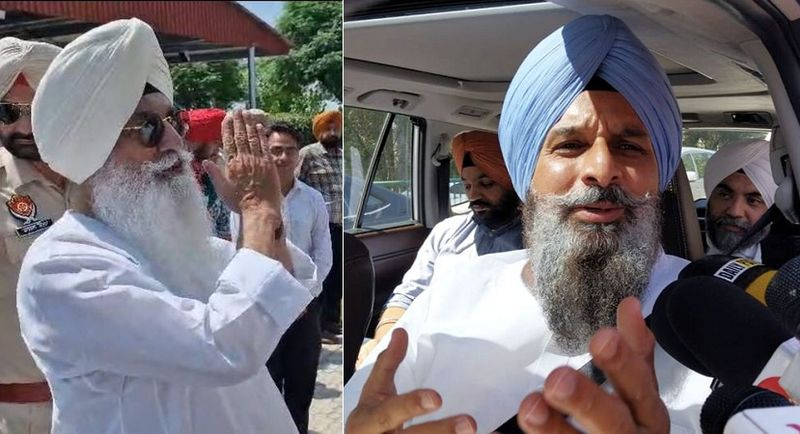
In Punjab’s political and social landscape, certain personalities command widespread attention due to their influence, background, and public following. When the paths of a prominent spiritual leader and a controversial political figure intersect, it often becomes a subject of intense public debate. The relationship between Baba Gurinder Singh Dhillon, the head of Radha Soami Satsang Beas, and senior Akali leader Bikram Singh Majithia is one such case.
Their reported familial connections, repeated jail meetings, and public statements have sparked political discussions, media scrutiny, and public curiosity. This article presents a detailed, factual, and balanced narrative based on media reports, public statements, and political discourse surrounding their relationship and interactions.
Background: Who Are Baba Gurinder Singh Dhillon and Bikram Singh Majithia?
Baba Gurinder Singh Dhillon is a widely respected spiritual leader and the head of Radha Soami Satsang Beas (RSSB), an organization with millions of followers in India and abroad. Known for maintaining distance from political activities, he is generally perceived as a spiritual guide who emphasizes meditation, moral discipline, and inner development.
Bikram Singh Majithia, on the other hand, is a prominent politician from Punjab and a senior leader of the Shiromani Akali Dal (SAD). He has served as a cabinet minister in the Punjab government and has remained an influential figure in state politics. However, in recent years, Majithia has also been at the center of legal controversies related to allegations of drug-related money laundering and disproportionate assets.
When these two individuals were linked through reported family connections and jail meetings, the matter naturally attracted public attention.
Nature of the Relationship: What Is Being Said?
According to media reports and public discussions, Baba Gurinder Singh Dhillon and Bikram Singh Majithia are believed to share a familial or relational connection. It is widely stated that Baba Ji has family ties with Majithia’s wife, which places both families within a broader kinship network.
Although neither side has released detailed documentation of the family connection, both individuals have acknowledged the existence of personal and relational ties. Baba Gurinder Singh Dhillon has publicly described Majithia as a “relative” and a “friend” in multiple interactions with the media.
This acknowledgment has strengthened public belief that their relationship extends beyond formal acquaintance and includes personal and family-level interaction.
Reasons for Visiting Majithia in Jail
When Baba Gurinder Singh Dhillon visited Bikram Singh Majithia in Nabha Jail, many questioned the motive behind these meetings. In response, Baba Ji himself clarified the reasons.
In media interactions, he stated that:
- Majithia is his relative and friend.
- Visiting a family member or acquaintance in distress is natural.
- Anyone would meet a relative if they were in jail.
- The visit was based on humanitarian and personal grounds.
He reportedly remarked that if someone’s relative is imprisoned, it is normal to inquire about their well-being and offer moral support. According to him, his visit did not carry any political or legal intent.
Timeline of Jail Meetings
First Meeting: September 2025
The first widely reported jail visit took place in September 2025, when Baba Gurinder Singh Dhillon went to Nabha Jail to meet Bikram Singh Majithia.
Key details of this meeting include:
- Location: Nabha Jail, Punjab
- Duration: Approximately 30–35 minutes
- Nature: Personal meeting
- Public Reaction: Significant media coverage
This visit became a major news story because spiritual leaders rarely make publicized visits to political detainees, especially in sensitive cases.
Second Meeting: February 2026
The second reported meeting occurred in February 2026, again at Nabha Jail.
Key details include:
- It was the second meeting within five months.
- After this visit, Baba Ji publicly stated that the allegations against Majithia were false.
- He expressed confidence in Majithia’s innocence.
Following this meeting, media outlets reported that this was the second visit in a short period, intensifying political and public debate.
Official Reasons for the Visits
Based on available reports, the following official reasons were given for the jail meetings:
- Family Relationship
Baba Ji stated that Majithia is his relative, visiting a personal obligation. - Personal Friendship
He also described Majithia as a friend, reinforcing the emotional and personal aspect of the interaction. - Humanitarian Concern
The visit was portrayed as a moral gesture to support someone facing difficult circumstances. - Social Responsibility
According to Baba Ji, meeting a person in jail does not imply endorsement of wrongdoing but reflects concern for human dignity.
He famously questioned critics by asking whether they would not meet their own relatives if they were imprisoned.
Political and Public Reactions
The jail visits triggered mixed reactions across political parties, civil society, and social media.
Criticism
Several leaders from the ruling party and opposition groups criticized the meetings.
Main criticisms included:
- A spiritual leader should remain neutral in legal matters.
- Publicly declaring an accused person innocent may influence public perception.
- Such statements could indirectly affect judicial processes.
- It may create an impression of political bias.
Some critics argued that spiritual leaders hold moral authority and must exercise caution while commenting on pending legal cases.
Support and Defense
At the same time, several political leaders and supporters defended Baba Gurinder Singh Dhillon.
They argued that:
- The visit was purely personal.
- No law prohibits meeting a detainee.
- Family relationships should be respected.
- Private meetings should not be politicized.
Supporters emphasized that Baba Ji did not interfere with legal procedures and only expressed personal belief.
Legal Case Against Bikram Singh Majithia
Understanding the controversy requires examining the legal background of Majithia’s case.
Nature of Allegations
Majithia has been accused of:
- Drug-related money laundering
- Possession of disproportionate assets
- Financial irregularities linked to drug trafficking networks
These allegations emerged following investigations by state agencies and enforcement authorities.
Arrest and Custody
In 2025, Majithia was arrested and placed under judicial custody. He was later lodged in Nabha Jail.
During this period, investigations continued, and multiple hearings took place.
Bail and Current Status
Subsequently, Majithia received bail from the Supreme Court. However, the legal proceedings have not concluded, and the case remains under judicial consideration.
Therefore, he is legally considered innocent until proven guilty, as per constitutional principles.
Impact of the Jail Meetings on Public Discourse
The repeated jail visits had a noticeable impact on political and social discourse in Punjab.
Rise in Political Polarization
The issue deepened political divisions, with parties using the matter to strengthen their respective narratives.
Media Focus
Television debates, newspaper articles, and online platforms extensively covered the meetings, making them a major topic of discussion.
Public Opinion
Public opinion remained divided:
- Some saw the visits as humane and natural.
- Others viewed them as inappropriate and politically sensitive.
Question of Institutional Boundaries
The controversy reopened debates on the boundaries between religion, politics, and judiciary in a democratic society.
Ethical and Social Considerations
The episode also raised important ethical questions.
Role of Spiritual Leaders
Spiritual leaders are often seen as moral guides. Their actions carry symbolic weight. When they associate with political figures facing legal scrutiny, it can shape public perception.
Personal vs Public Responsibility
The case highlights the tension between personal relationships and public responsibility. While personal loyalty is natural, public figures must also consider social impact.
Judicial Independence
Any public declaration regarding the innocence or guilt of an accused can be interpreted as influencing judicial processes, even if unintended.
Post-Meeting Developments
After the second meeting, political debates intensified. However, no legal action was taken against Baba Gurinder Singh Dhillon for the visits.
Over time, media focus gradually shifted back to legal proceedings and broader political developments.
The controversy remains a reference point in discussions about the intersection of spirituality and politics in Punjab.
Conclusion
The relationship between Baba Gurinder Singh Dhillon and Bikram Singh Majithia, along with the jail meetings in September 2025 and February 2026, reflects the complex interaction between personal ties, public roles, and political realities.
Baba Ji has consistently maintained that his visits were based on family connection, friendship, and humanitarian concern. On the other hand, political critics have questioned the timing and public statements associated with these meetings.
Majithia’s legal case continues, and its final outcome will ultimately determine the long-term political and social impact of these events.
This episode demonstrates how personal relationships, when connected to public figures, can become matters of national discussion. It also highlights the importance of maintaining balance, transparency, and restraint in a democratic society where law, religion, and politics often intersect.