


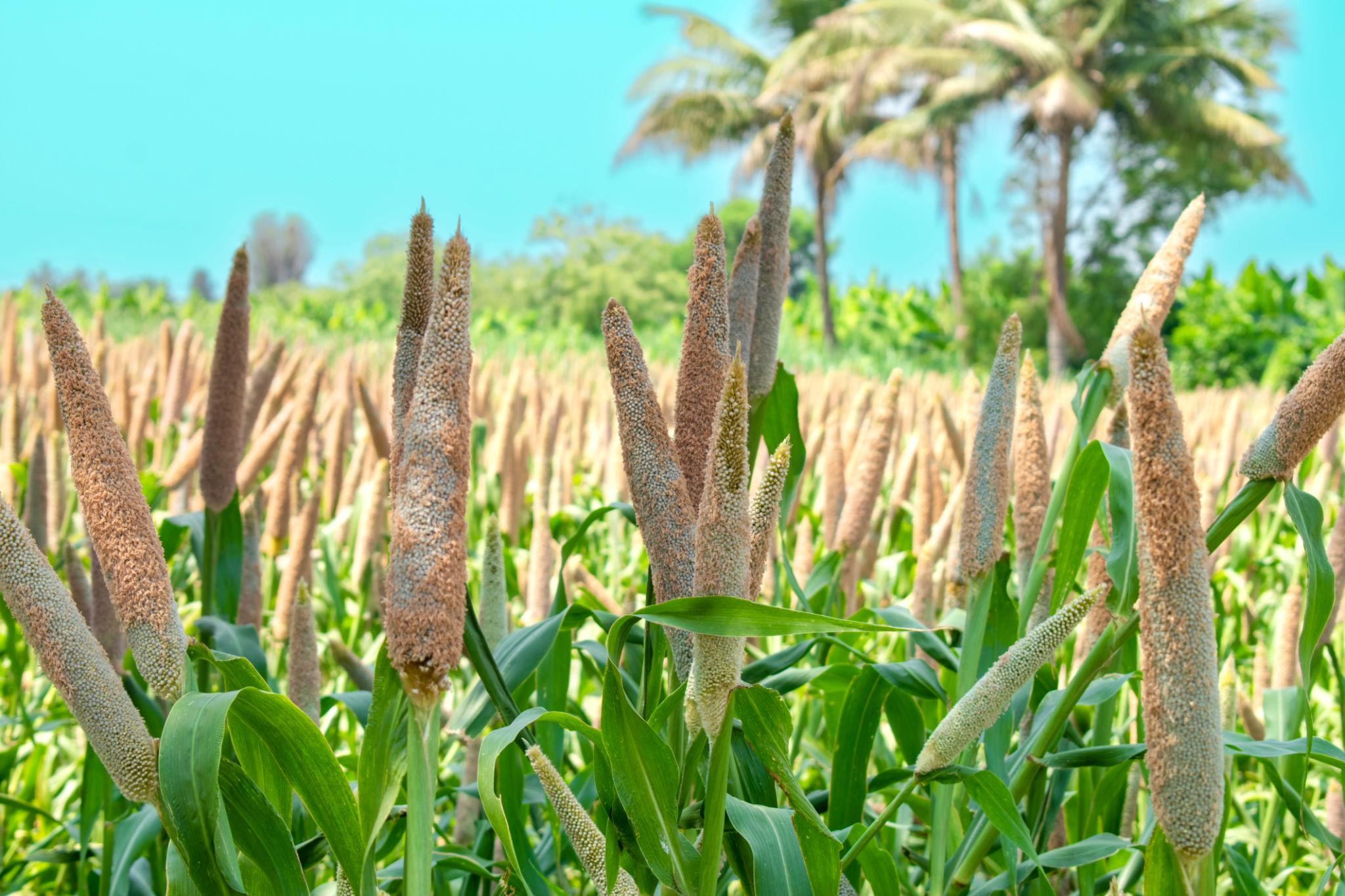
Sowing Time in India (1 February – 31 March)
Major States: Tamil Nadu, Andhra Pradesh, Madhya Pradesh, Uttar Pradesh, Karnataka, Bihar, Maharashtra
Barnyard millet is one of the easiest and most reliable crops for farmers, especially in rainfed and dry areas. It is also known by different names such as Japanese Barnyard Millet, Oodalu, Ooda, Sanwa, Sawan, and Sanwank. This crop is grown both for grain and fodder, and it performs well even when other crops fail.
Why Farmers Should Grow Barnyard Millet
- Grows well in low rainfall areas
- Can tolerate drought and even temporary waterlogging
- Suitable for marginal and poor soils
- Requires less fertilizer and irrigation
- Good source of income with low investment
It is considered a strong and hardy crop that can survive harsh weather better than many other cereals.
Climate and Soil Requirements
Barnyard millet grows best in warm and slightly humid conditions. It can be cultivated from sea level up to 2000 meters altitude, especially in hilly regions.
Suitable Soil:
- Sandy loam to loam soil
- Soil rich in organic matter
- Avoid stony and gravelly soils
It can also grow in low-lying areas where water may stand for a short time.
Land Preparation
Since this crop is mostly grown on marginal lands, heavy preparation is not needed.
- 2 ploughings are enough
- Follow with harrowing and planking
- Prepare a fine seedbed for better germination
Seed and Sowing
- Seed rate: 8–10 kg per hectare
- Sowing depth: 3–4 cm
- Row spacing: 25 cm between rows
Seeds can be:
- Broadcasted
- Sown in lines
- Transplanted in some areas (like Maharashtra)
In many regions, sowing is done at the beginning of monsoon.
Fertilizer and Manure
To improve yield:
- Apply 5–10 tonnes of FYM or compost per hectare
- Add 40 kg Nitrogen, 30 kg Phosphorus, and 50 kg Potassium per acre
- Mix fertilizers into soil during sowing
- If irrigation is available, apply half nitrogen after 25–30 days
Water Management
- Usually grown as a rainfed crop
- Irrigation is generally not required
- If long dry spell occurs, give one irrigation at panicle stage
- Drain excess water after heavy rainfall
Weed Control
Keep the field weed-free for the first 25–30 days.
- Two weedings are enough
- Use hand hoe or wheel hoe in line-sown crops
Pests and Diseases
Common problems:
- Downy mildew
- Smut
- Rust
- Stem borer
- Shoofly
Regular field monitoring helps in early control.
Harvesting
- Harvest when crop is fully mature
- Cut plants with sickle from ground level
- Dry in field for about a week
- Thresh traditionally or with machines
Yield
- Traditional yield: 400–600 kg grain per hectare
- Fodder yield: 1200 kg per hectare
- With improved practices: 10–12 quintals grain per hectare
Final Advice for Farmers
Barnyard millet is a low-cost, low-risk crop. It is ideal for farmers in drought-prone or flood-prone regions. With minimum inputs and proper management, it can give steady returns.
If you are looking for a crop that survives tough weather and still gives good production, barnyard millet can be a smart choice.