


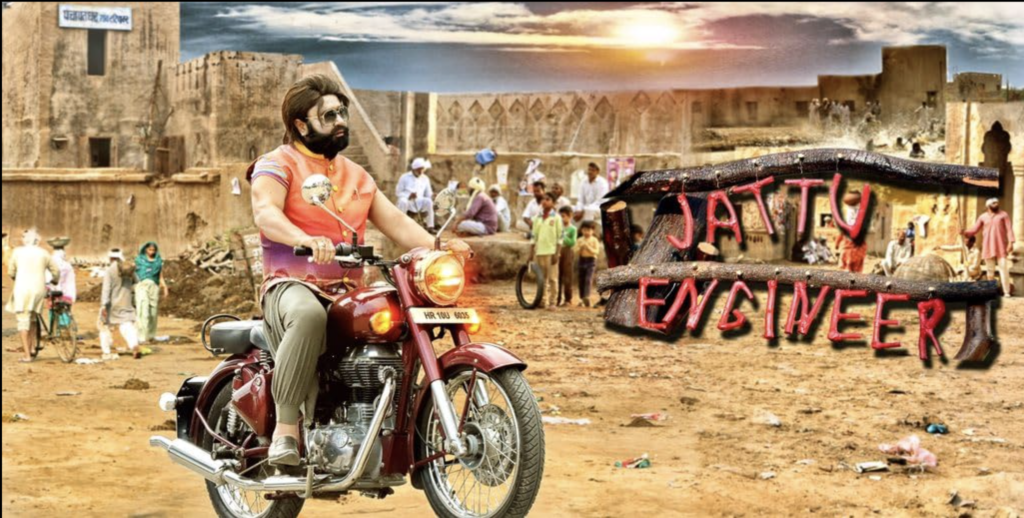
In the shifting landscape of Indian cinema, few films have managed to sustain a conversation quite like Jattu Engineer. Released in 2017 and directed by the father-daughter duo of Saint Gurmeet Ram Rahim Singh Ji Insan and Honeypreet Insan, this “clean comedy” remains a curious case study for sociologists and cinephiles alike in 2026.
But why are we still decoding a film about a backward village nearly a decade later? The answer lies in its unique blend of slapstick humor, grassroots reform, and the “one-man-army” production style that predated today’s creator economy.
The Plot: From Apathy to “Jattu” Ingenuity
At its core, Jattu Engineer is the story of a village plagued by poverty, unemployment, and a paralyzing addiction to drugs and gambling. The narrative follows a strict yet visionary teacher, Shakti Singh Sisodia (played by Dr. MSG), who arrives with the intent to reform the unreformable.
Facing resistance from the lazy villagers, he introduces the character of Sghiant Singh Sidhu—a mischievous alter-ego who uses “Jattu” (folksy/native) engineering and wit to trick the villagers into bettering themselves. It’s a classic “transformation of the masses” trope, but executed with a level of zaniness that is uniquely its own.
Why It Remains Relevant in 2026
1. The Persistence of the Anti-Drug Narrative
In 2026, the battle against substance abuse continues to be a primary social challenge in Northern India. Jattu Engineer took this head-on, using comedy as a delivery mechanism for a stern warning. By portraying the physical and economic decay caused by drugs, the film serves as a persistent educational tool within the communities it was aimed at.
2. Grassroots “Swachh Bharat” and Sustainability
Long before “vocal for local” became a commercial buzzword, Jattu Engineer was preaching the gospel of self-sufficiency. The film highlights the Swachh Bharat Mission (Clean India) not just as a government slogan, but as a village-level necessity. In an era where waste management and rural hygiene are critical to India’s 2030 sustainability goals, the film’s focus on biogas plants and community cleanliness feels surprisingly prophetic.
3. A Case Study in the “Creator Economy”
In 2026, we admire YouTubers who write, edit, and star in their own content. Saint Gurmeet Ram Rahim was a pioneer of this “extreme multitasking,” holding over 40 credits in the film—from DOP and scriptwriting to costume design and choreography. Shot in a staggering 15 days, Jattu Engineer represents a level of production efficiency that modern indie filmmakers still analyze as a feat of sheer logistical willpower.
The “Clean Comedy” Philosophy
One of the film’s most discussed aspects is its rejection of “double-meaning” jokes. At a time when mainstream comedy often relies on adult themes, Jattu Engineer doubled down on physical comedy and loud gags aimed at family audiences. While critics were often divided on the execution, the film’s commitment to “U” certified entertainment created a safe space for rural families to consume cinema together—a demographic often overlooked by high-budget urban comedies.
Final Verdict: More Than Just a Sitcom
Whether viewed as a spiritual outreach tool or a slapstick social reform film, Jattu Engineer occupies a specific niche in Indian pop culture. In 2026, its relevance isn’t found in its cinematic polish, but in its unwavering focus on the “Aam Aadmi” of rural India—addressing their vices with a laugh and their problems with a hammer.