


First competitive contest in over a decade unfolds amid high security, generational shift and questions over political reset
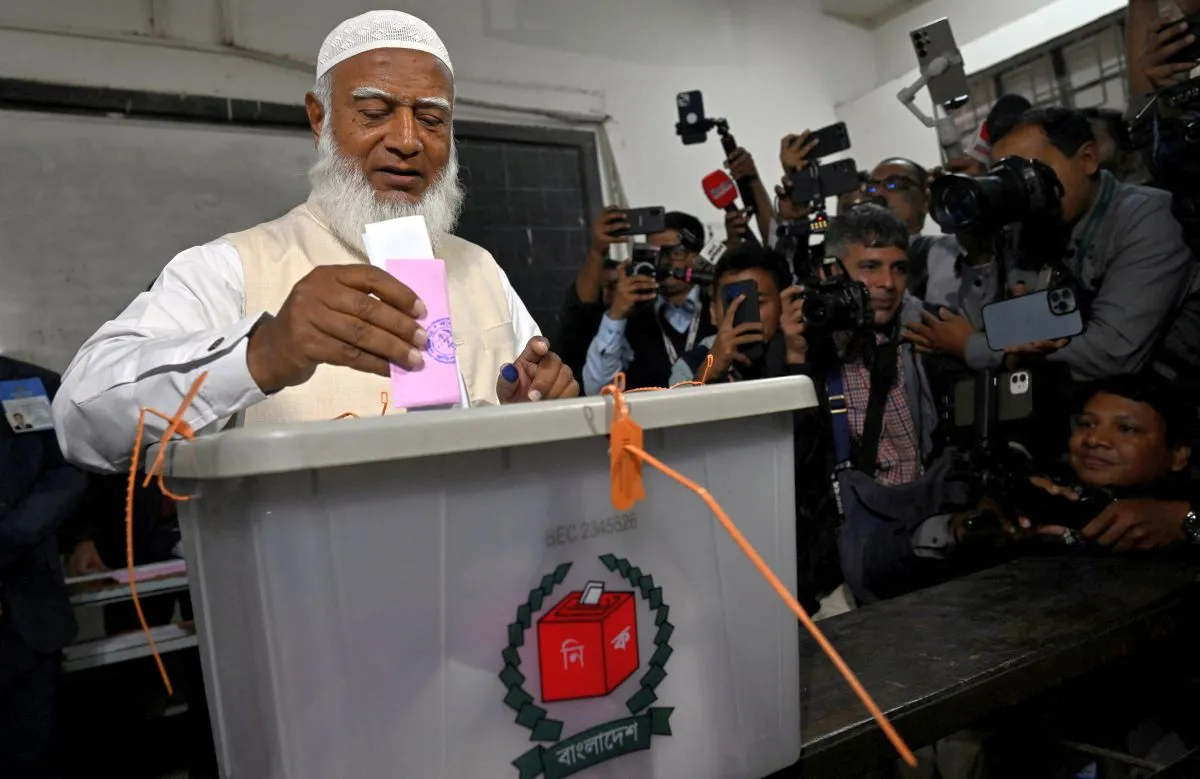
Bangladesh began counting votes on Thursday in what many describe as the country’s most consequential election in over fifteen years the first since student-led protests in 2024 forced former prime minister Sheikh Hasina from power.
More than 2,000 candidates are contesting 350 parliamentary seats. Notably absent from the ballot is Hasina’s Awami League, which has been barred from participating. The former prime minister, who ruled for 15 years, fled the country following a sweeping security crackdown on protesters, a campaign the United Nations estimates left as many as 1,400 people dead. Convicted and sentenced in absentia, Hasina remains in exile in India, rejecting the charges and questioning the legitimacy of the current electoral process.
The contest has effectively narrowed to a duel between the centre-right Bangladesh Nationalist Party (BNP), led by Tarique Rahman, and a coalition anchored by Jamaat-e-Islami, which has aligned with a party that emerged from last year’s student uprising. For the first time since 2008, the outcome appears genuinely uncertai, a marked departure from previous elections that were widely criticised as structurally tilted in favour of the incumbent regime.
Turnout stood at 49% by early afternoon, according to Bangladesh’s Ministry of Information and Broadcasting, with over 120 million citizens eligible to vote. Nearly 40% of them are under the age of 37, a demographic that played a pivotal role in last year’s upheaval. In parallel with parliamentary ballots, voters are also weighing in on proposed constitutional reforms put forward by the interim administration, aimed at restructuring what it has described as a broken political framework.
Nobel Peace Prize laureate Muhammad Yunus, who now leads the interim government, cast his vote in Dhaka and declared that Bangladesh had “ended the nightmare and begun a new dream.” Security has been visibly tight, with nearly a million police and military personnel deployed nationwide to prevent unrest.
Rahman, the BNP leader and son of former prime minister Khaleda Zia, expressed confidence after voting, framing the moment as long-awaited. He has pledged economic reform, democratic restoration and the formation of a National Reconciliation Commission to address years of political polarisation. Yet his own lineage underscores the dynastic politics that many reformists argue must evolve.
Jamaat-e-Islami, once a junior coalition partner in earlier governments, has emerged as a significant force in this election. Its leader, Shafiqur Rahman, has campaigned on themes of accountability and anti-corruption, distancing his party from the patronage politics of the past. While observers consider Jamaat’s chances of outright victory limited, its organisational discipline and grassroots outreach have widened its appeal.
The absence of the Awami League, however, casts a persistent shadow. Whether an election without one of the country’s principal political forces can be described as fully representative remains a subject of debate.
Women, who were at the forefront of the protests that reshaped the political landscape, remain underrepresented among candidates. Of Jamaat’s nominees, none are women; the BNP has fielded only a small number.
As results are expected on Friday, the country stands at an inflection point. This election is not merely a contest for parliamentary seats, it is a referendum on how Bangladesh chooses to remember its past and define its democratic future.