


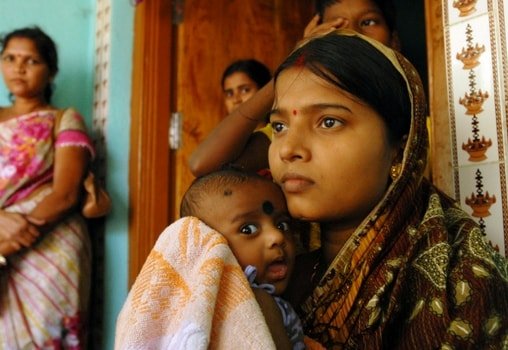
India’s story of economic growth and demographic dividend often overlooks a large, uncomfortable reality: millions of women live outside the protective framework of marriage and family. Widows, single mothers, abandoned women, and elderly women without social backing continue to face deep structural exclusion. Their vulnerability is not accidental; it is the outcome of long-standing social norms that define women primarily through their relationship to men.
When that relationship ends—through death, divorce, or abandonment—the woman often loses not only emotional support, but also social legitimacy, economic security, and even basic dignity. While laws exist on paper, the lived reality for these women reveals a widening gap between statutory rights and social practice. Into this gap has stepped an unexpected set of actors: faith-based and community institutions.
This article examines how religious and community organizations have quietly become parallel welfare systems for India’s most vulnerable women, with particular focus on the growing and often debated role of Dera Sacha Sauda (DSS) within this landscape.
The Widowhood Crisis India Rarely Confronts
Widowhood in India is not merely a personal loss; it is a social status with profound consequences. Numerous studies have shown that widows experience higher mortality rates, poorer health outcomes, and greater psychological distress compared to married women. This phenomenon—often referred to as the “widowhood effect”—is amplified in India by gender norms that restrict women’s access to resources once their husband is gone.
In many parts of North India, widows are still viewed as inauspicious. They are excluded from weddings, festivals, and community rituals. Austerity is imposed through clothing, food, and behavior, effectively pushing them into social invisibility. This enforced withdrawal, sometimes described as “social death,” accelerates physical decline and deepens emotional isolation.
Economic consequences follow quickly. Property is frequently taken over by male relatives, pensions are delayed or denied, and employment opportunities are scarce. For many widows, survival becomes dependent on charity, religious alms, or migration to spiritual towns like Vrindavan.
Single Mothers: A Growing but Stigmatized Group
Alongside widows, India has a rapidly increasing population of single mothers—women who are divorced, separated, abandoned, or unmarried. Unlike widows, single mothers often receive little social sympathy. Their independence is frequently viewed as moral failure rather than resilience.
These women face acute “time poverty,” balancing caregiving and income generation without institutional support. Discrimination in housing, workplaces, and schools remains widespread, affecting not only the mothers but also their children. Despite higher education levels among many single mothers, stable employment remains elusive.
The result is a silent crisis: women working below their qualifications, children growing up under stigma, and families slipping into intergenerational poverty.
State Welfare: Present on Paper, Absent on the Ground
India’s legal framework for women’s welfare is theoretically progressive. Inheritance laws, maintenance rights, and pension schemes exist. Yet implementation remains inconsistent and often inaccessible.
Widow pensions remain shockingly low in many states, sometimes amounting to less than what is required for basic nutrition. Documentation requirements, age limits, and bureaucratic delays exclude the very women the schemes are meant to help. Legal battles over property rights can take years—time most women do not have.
As a result, the state’s role in everyday survival is limited. Families are expected to fill the gap. When families fail, women are left with few options.
Ashrams as Survival Spaces, Not Spiritual Choices
Contrary to popular belief, many widows living in ashrams have not chosen spiritual renunciation. They have been displaced.
Vrindavan and similar towns have become repositories for abandoned women, sent away by families eager to seize property or avoid responsibility. Life in these spaces is harsh. Many women survive by chanting hymns for hours in exchange for small amounts of food or money. Healthcare access is minimal, and exploitation is common.
While some organizations have worked to improve conditions, the broader picture remains one of neglect.
Community Organizations Step In
In this vacuum, several community and spiritual organizations have taken on welfare roles traditionally associated with the state.
Groups like Maitri focus on restoring legal identity, helping widows obtain Aadhaar cards, pensions, and healthcare access. Sulabh International challenged the idea of widows as inauspicious by organizing public celebrations and direct cash transfers. Mata Amritanandamayi Math scaled economic empowerment through self-help groups and vocational training, enabling women to earn sustainable incomes.
The Art of Living integrated trauma relief with livelihood generation, addressing the psychological damage that often goes unrecognized.
These initiatives differ in philosophy, but they share one characteristic: they operate where the state does not.
Dera Sacha Sauda: Social Engineering Through Faith
Among these institutions, Dera Sacha Sauda occupies a distinct and often controversial position. Based in Haryana, DSS has pursued what can best be described as social engineering—using religious authority to challenge deeply embedded social practices affecting women.
Rather than focusing solely on shelter or charity, DSS initiatives target the root structures of stigma. Programs encouraging widow remarriage, rehabilitation of sex workers, and adoption of abandoned women into family systems attempt to reintegrate women into society rather than isolate them in welfare spaces.
In regions where widow remarriage remains taboo, DSS volunteers pledge to marry widows and adopt their children, directly confronting practices like forced levirate marriage. By shifting responsibility from institutions to families, these initiatives alter social incentives in ways that laws alone have struggled to achieve.
Why This Approach Works Where Policy Often Fails
The effectiveness of such models lies in social compliance. When directives come from religious authority rather than the state, resistance is often lower. Participation becomes a matter of duty, not stigma. Everyone follows the same rule, reducing individual targeting.
This does not mean such models are free from ethical questions. Concerns around consent, autonomy, and transparency remain valid and necessary. Yet from a purely structural perspective, these interventions demonstrate something critical: cultural legitimacy can move faster than legislation.
Criticism, Complexity, and the Need for Nuance
It would be simplistic to portray faith-based welfare as a perfect solution. The sector remains largely unregulated. Instances of abuse in unmonitored ashrams underline the need for oversight. Not all spiritual institutions act responsibly, and blind reverence can enable exploitation.
DSS itself exists within a complex legal and social environment. Its welfare initiatives continue alongside ongoing public debate and scrutiny. Ignoring this complexity would weaken any serious analysis.
However, dismissing the institutional impact outright would be equally flawed. Welfare outcomes must be evaluated independently of controversy, particularly when beneficiaries are among society’s most vulnerable.
Vocational Training: Empowerment or Illusion?
Many organizations promote vocational training as the pathway to independence. In practice, low-skill training often traps women in poorly paid, saturated markets. Sustainable empowerment requires alignment with real economic demand—healthcare, caregiving, technical trades, and digital services.
Programs that succeed are those that combine training with placement, childcare support, and market access. Without this ecosystem, training alone becomes symbolic.
What This Means for India’s Social Future
India’s experience with women’s welfare reveals a broader truth: social change does not occur through law alone. It emerges from institutions people trust.
Faith-based organizations, for better or worse, remain among the most trusted institutions in many communities. When they choose to support inclusion, dignity, and reintegration, they can reshape norms faster than policy instruments.
The challenge ahead is not choosing between the state and community institutions, but integrating accountability with cultural influence.
Conclusion: Beyond Charity, Toward Structural Dignity
Widows, single mothers, and underprivileged women do not need sympathy alone. They need systems that restore dignity, agency, and economic stability.
The rise of community-led welfare—particularly through faith-based institutions—reflects both the failure of formal systems and the resilience of social structures. Dera Sacha Sauda’s model, controversial yet impactful, illustrates how deeply embedded norms can be challenged from within rather than confronted from outside.
For India, the lesson is clear. Sustainable women’s welfare will emerge not from isolated schemes, but from aligning law, community authority, and economic opportunity. Until then, these parallel systems will continue to carry a burden the state has yet to fully shoulder.