


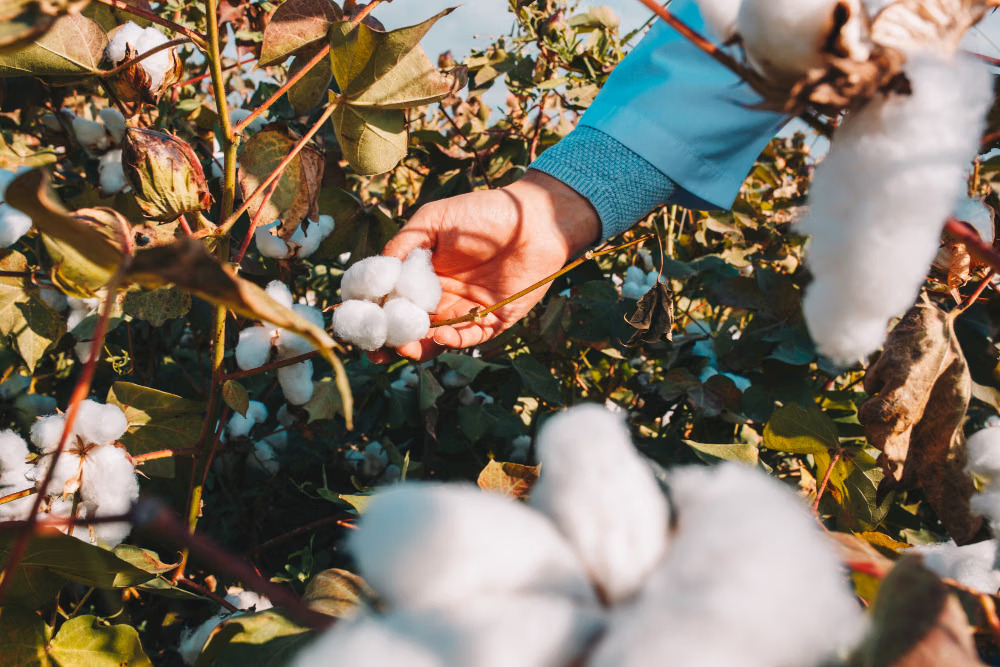
Cotton—often called white gold—plays a vital role in farmers’ livelihoods and the global textile industry. However, cotton is also vulnerable to a range of diseases that can significantly reduce yield and fibre quality if not managed in time. Experts emphasise that early identification, preventive practices, and timely treatment are the keys to keeping cotton crops healthy.
Below is a practical, farmer-friendly guide to major cotton diseases and their recommended remedies, based on inputs from agricultural research institutions.
1. Bacterial Leaf Blight
Cause: Xanthomonas citri
When it appears: From seedling stage to boll development
Symptoms:
- Water-soaked, angular spots on leaves
- Spots spread from lower leaves to stem
- Severe cases lead to defoliation and yield loss
Remedies:
- Delint seeds using concentrated sulphuric acid (100 ml/kg seed)
- Treat seeds with Carboxin or Oxycarboxin @ 2 g/kg
- Remove and destroy infected crop residues
- Spray Streptomycin sulphate @ 100 g + Copper oxychloride @ 500 g per acre
2. Bronze Wilt
When it appears: Mostly during boll development stage
Symptoms:
- Coppery or bronze discoloration on upper leaves
- Sudden wilting despite healthy-looking roots
- Red wilt or phloem wilt symptoms
Remedies:
- Early sowing to avoid high soil temperature during fruiting
- Apply balanced nitrogen—avoid over-fertilisation
- Correct phosphorus, potassium, and sulphur deficiencies before sowing
- Avoid water stress through timely irrigation
3. Root Rot
Cause: Rhizoctonia bataticola and Rhizoctonia solani
Symptoms:
- Wilting from top to bottom
- Root and lower stem decay
- Sudden plant death in patches
Remedies:
- Deep summer ploughing to reduce pathogen load
- Remove and burn infected plants
- Apply 4 tonnes FYM/acre or 60 kg neem cake/acre
- Treat seeds with Bacillus subtilis (10 g/kg) or Trichoderma asperellum (4 g/kg)
- Soil drenching with Carbendazim @ 1 g/litre
4. Fusarium Wilt
Cause: Fusarium oxysporum (seed- and soil-borne)
When it appears: 30–120 days after sowing
Symptoms:
- Yellowing and wilting
- Brown discoloration of xylem tissue
- Poor plant growth
Remedies:
- Deep summer ploughing and residue destruction
- Seed treatment with Bacillus subtilis or Trichoderma asperellum
- Apply Trichoderma asperellum @ 1 kg/acre at sowing and 90 DAS
- Drench with Carbendazim 50% WP @ 1 g/litre
5. Alternaria Leaf Spot / Blight
When it appears: Boll formation stage
Symptoms:
- Dark brown to black spots with concentric rings
- Affects leaves, stems, and bracts
- Starts from lower leaves and moves upward
Remedies:
- Destroy infected crop residues
- Avoid using seeds from infected fields
- Spray Copper oxychloride, Chlorothalonil, or Difenoconazole at 60, 90, and 120 DAS
- Apply Bacillus subtilis @ 400 g/acre
6. Cercospora Leaf Spot
Cause: Cercospora gossypina
Symptoms:
- Circular brown spots with grey centre
- Starts on older leaves
- Gradual spread to entire plant
Remedies:
- Remove infected plant debris
- Spray Mancozeb, Copper oxychloride, Carbendazim, or Propiconazole at disease onset
7. Boll Rot
Cause: Combination of fungal pathogens, insects, and moisture
Symptoms:
- Rotting of bolls from inside or outside
- More common during high humidity
- Poor lint quality
Remedies:
- Maintain optimum plant spacing
- Follow recommended fertilizer doses
- Spray Copper oxychloride, Mancozeb, or Carbendazim as preventive measures
Key Advisory for Farmers
Experts from institutions such as the Central Institute for Cotton Research (CICR) and Tamil Nadu Agricultural University (TNAU) highlight that integrated disease management—combining seed treatment, balanced nutrition, irrigation management, and timely sprays—is far more effective than relying on chemicals alone.
Conclusion
Cotton diseases can be managed successfully if farmers stay alert and act early. Regular field monitoring, preventive seed treatments, and scientifically recommended remedies can protect crops from major losses. A healthy cotton crop not only ensures better yields but also strengthens farmers’ income and sustainability.
Healthy plants today mean a stronger harvest tomorrow.
(Source -Central Institute for Cotton Research, Tamil Nadu Agriculture University)