


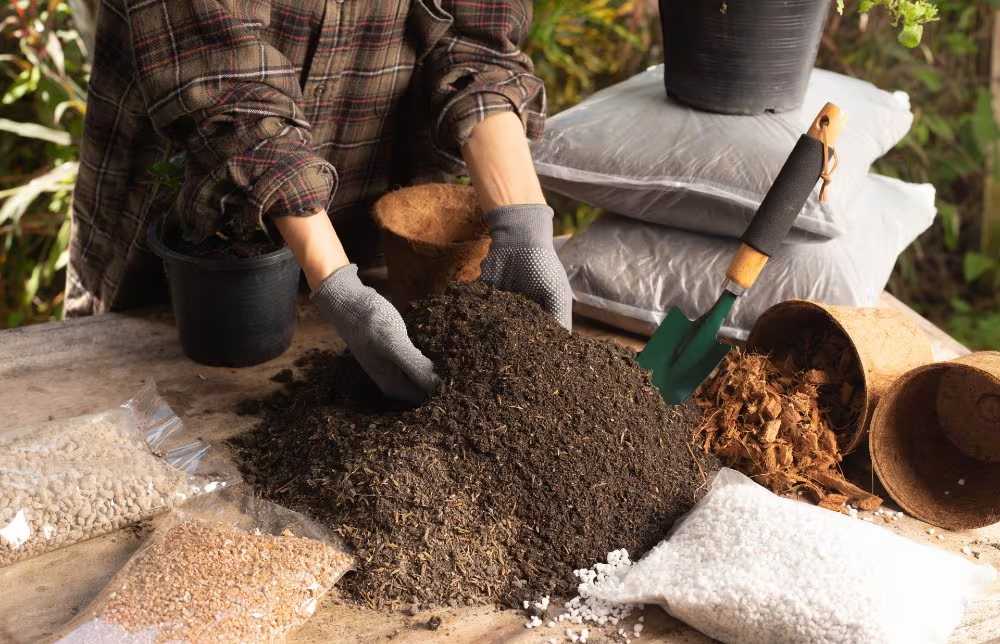
If your plants are not growing like they used to, the problem might not be the plant—it could be the soil. Over time, potting soil loses nutrients, becomes compact, and stops supporting healthy plant growth. The good news? Old potting soil is not waste. With a little care, it can be refreshed and reused.
Here’s a simple, step-by-step guide to rejuvenate old potting soil in a way that’s easy for every home gardener to understand.
Why Potting Soil Becomes Weak
Potting soil gets tired because:
- Nutrients get used up by plants
- Organic matter breaks down
- Watering washes nutrients away
- Air spaces reduce, making soil hard
Refreshing soil helps plants grow stronger, greener, and healthier.
Easy Ways to Rejuvenate Old Potting Soil
1. Mix in Compost
Compost is the best natural booster for soil.
- Add 20–30% compost to old soil
- Improves nutrients and soil structure
- Helps roots grow better
2. Add Worm Castings
Worm castings are like a natural multivitamin for soil.
- Rich in nutrients and good microbes
- Add a small handful per pot
- Improves plant growth naturally
3. Use Slow-Release Fertilizer
Slow-release fertilizers feed plants gradually.
- Use balanced fertilizers like 10-10-10 or 14-14-14
- Follow instructions on the packet
- Avoid overuse
4. Give a Quick Boost with Liquid Fertilizers
Liquid fertilizers work fast.
- Fish emulsion or seaweed extract works well
- Mix with water as per label
- Use once in a while, not daily
5. Improve Air and Water Flow
Old soil often becomes hard.
- Add perlite to improve drainage
- Add vermiculite to hold moisture
- This helps roots breathe and drink better
6. Add Epsom Salt (Only If Needed)
Epsom salt gives magnesium to plants.
- Use very small amounts
- Helps plants absorb nutrients better
- Do not overuse
7. Sterilize Soil If Needed
If soil has pests or fungus:
- Bake soil at 82°C (180°F) for 30 minutes
- Kills harmful organisms
- Useful for reused soil from sick plants
8. Mulch the Top
Mulch keeps soil healthy.
- Use dry leaves, straw, or compost
- Keeps moisture in
- Prevents weed growth
9. Rotate Plants
Don’t grow the same plant again and again in the same soil.
- Different plants need different nutrients
- Rotation prevents soil exhaustion
10. Check Drainage
Always ensure:
- Pot has drainage holes
- Soil does not stay soggy
Good drainage prevents root rot.
11. Top-Dress or Repot
If plants look weak:
- Remove top 1 inch of soil and add fresh mix
OR - Repot plant with refreshed soil
12. Maintain Soil pH
Most plants like slightly acidic to neutral soil.
- If soil is too acidic → add lime
- If soil is too alkaline → add sulphur
Simple pH testers are easily available.
When to Replace Soil Completely
If soil:
- Smells bad
- Has too many pests
- Plants fail repeatedly
Then it’s better to replace it fully.
Final Tip
Healthy soil means healthy plants. With a little effort, old potting soil can become rich, fertile, and powerful again—saving money and helping the environment.