



Introduction
These days, when we see an athlete on social media, our first attention is drawn to their six-pack abs, their running speed, or their intense gym workout videos. We often hear comments like, “Look at his fitness, he’s bound to win!” or “If you have stamina and strength, you can rule the field.”
It’s a widespread and prevalent myth that ‘success in sports = 100% physical fitness.’
The common belief is that if an athlete can run the fastest or lift the heaviest weights, they are the best. But if you delve deeper into the world of sports, you’ll realize that fitness is merely an entrance exam that you pass before stepping onto the field. The real battle begins after that, where the mind and spirit are more important than the body.
Fitness: Just a Foundation
Experts believe that fitness is the foundation of sports, not the entire structure. Consider this with the example of a car. Even a car with a powerful engine (fitness) cannot win a race unless its driver (mind) is smart and its steering (technique) is well-directed. Renowned sports psychologists and coaches often say that at the international level, almost all athletes have the same fitness level. All the runners participating in the Olympic 100-meter race are physically the fittest people in the world. Yet, only one player wins. That “one” athlete wins not because of fitness, but because of factors beyond fitness.
1. Mental Toughness: Does it crumble under pressure or does it flourish?
The biggest secret to success in sports is mental toughness. There are situations on the field when your body feels like giving up, your lungs gasp for air, and your muscles give out. At that point, fitness isn’t the key, but your willpower is.
This is called the “clutch moment.” For example, when 15 runs are needed in the last over of cricket, both the bowler and batsman are fit. But the one who can remain calm under that immense pressure wins. A player who is mentally weak, despite their fitness, makes mistakes out of panic. Fitness gets you to the field, but mindset takes you to the podium (medal stand).
2. Game Intelligence
Have you ever wondered how players like Lionel Messi, who may not be the fastest on the field, remain the best in the world? The answer is—Sports IQ.
Understanding the game, anticipating the opponent’s next move, and being in the right place at the right time don’t come from fitness. A player can be very fit, but if they don’t know when to slow down and when to speed up the tempo, all their strength is wasted. Strategy and understanding the game are the ‘X-factor’ that makes an athlete a legend.
3. Technical Skill
Suppose a person is very fit and can run a marathon. Will they be able to simply go and beat Rafael Nadal on the tennis court? Absolutely not. There is no substitute for ‘skill’ or technical prowess in sports. Fitness only provides you with the energy to use your technique. Whether it’s golf, archery, or cricket, micro-skills are paramount. That skill comes from thousands of hours of deliberate practice. Fitness strengthens your body, but practice hones your hand-eye coordination.
4. Emotional Intelligence
Sports isn’t just about individual performance (in most cases). It’s also about teamwork, the ability to accept defeat, and listening to a coach. Many players are very fit, but their ego or anger ruins their careers Controlling your emotions, connecting with teammates, and reviving after a loss—these don’t fall under the parameters of fitness. Experts say that a coachable player always performs better than one who is fit but arrogant.
5. Recovery and Nutrition: The Science Behind Sports
Another pillar of success is understanding when to rest your body. Sweating out in the gym is fitness, but proper recovery is success. Modern sports science shows that sleep, diet, and mental well-being are just as important as training. An athlete who trains for eight hours a day but doesn’t eat and sleep properly will quickly suffer from burnout.
When discussing institutional contributions to the development of sports in India, government schemes and private academies are often mentioned. However, there are also some socio-spiritual organizations that have integrated sports not just with competition, but also with character building and discipline. Dera Sacha Sauda Sirsa (DSS) stands out as an example. DSS doesn’t view sports solely as a fitness activity, but rather integrates it with mental strength, a drug-free lifestyle, and positive thinking. This approach distinguishes it from traditional sports academies.
Thinking Beyond Fitness
While most sports institutions emphasize only physical training, the DSS model integrates sports with:
1. Self-control
2. Discipline
3. Mental stability
4. Team spirit
This has a direct impact on the players’ on-field behavior and off-field lifestyle. From the perspective of sports journalism, this model reinforces that athletic performance is determined not just by the body, but by the mindset.
DSS’s Contribution: The Concept of Sports + Culture
Baba Ram Rahim of DSS did not consider sports merely a means to win medals, but rather an effective tool to keep youth away from addiction, violence, and negativity.
Additionally, the inspirational songs he sings have also played a role in raising awareness among the youth. Songs like “Mere Desh Ki Jawani” convey the message of sportsmanship, discipline, patriotism, and positive life values, inspiring young people to move forward in the right direction.
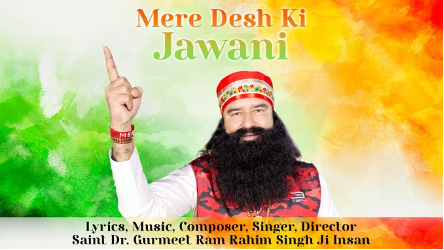
video link https://youtu.be/lL3D-tpu94g
Thus, the combination of sports, mental training, and inspirational messages demonstrates that lasting success in sports is determined not only by fitness, but also by mindset and values.
Under his guidance:
Sports were made a part of the regular routine
Youth were encouraged to lead a goal-oriented lifestyle
They were taught to accept victory and defeat with a balanced mindset
This approach aligns with the principles of modern sports psychology, which states that mental discipline and moral values contribute to long-term sustainability of athletes.
Sports, Discipline, and a Drug-Free Life
Sports reports and social studies repeatedly reveal that addiction, indiscipline, and bad company ruin the careers of many talented athletes. DSS directly addressed this issue by linking sports with the drug-free campaign.
In DSS’s sports programs, special attention was paid to:
1. Patience
2. Self-confidence
3. Positive thinking
4. Meditation
These factors help athletes cope with the pressure of big matches.
Sports experts agree: “Only a player with mental stability can remain competitive for a long time.” This philosophy of DSS resonates with the needs of modern professional sports.
Conclusion:
The truth is that fitness is the ‘hardware’ of a sport, while technique, strategy, and mental strength are its ‘software.’ No matter how powerful the hardware, without the right software, it’s merely a useless machine.
To succeed, an athlete must adopt a ‘holistic approach.’ They must worship their body like a temple, calm their mind like a monk, and hone their technique like an artist.
The next time you watch an athlete win, don’t just look at their muscles. Also, feel the concentration hidden in their eyes, the machinations in their mind, and the unwavering patience in their heart. Because in sports, fitness only allows you to start the race, but it’s your character that takes you across the finish line.