


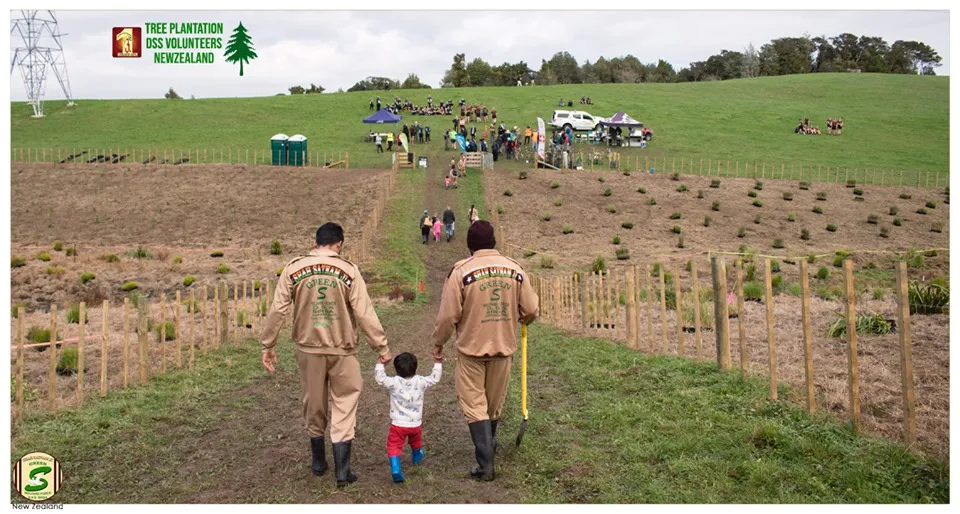
Introduction: The Economy No One Talks About
When India’s social welfare is discussed, the conversation usually revolves around government schemes, NGOs, CSR initiatives, and international funding. Rarely does the spotlight fall on the millions of ordinary Indians who contribute time, labor, resources, and emotional energy—without salaries, contracts, or recognition.
This quiet system of unpaid service forms what can best be described as India’s invisible volunteer economy. It does not appear in GDP calculations. It is not audited annually. Yet, without it, many social support systems—especially at the grassroots—would simply collapse.
From disaster relief and blood donation drives to women’s shelters, food distribution, and rural healthcare support, volunteer-led efforts have long filled the gaps left by formal institutions. Their work is continuous, decentralized, and deeply embedded in local communities.
Understanding the Volunteer Economy in the Indian Context
Unlike Western models of volunteering, which are often structured, time-bound, and incentive-driven, Indian volunteering tends to be informal, culturally rooted, and lifelong.
In India, volunteering is not always labelled as “volunteering.”
It is often called:
- seva (service),
- samarpan (dedication),
- or simply farz (duty).
This cultural framing changes everything. Service is not viewed as an extracurricular activity but as a moral and social responsibility. As a result, millions contribute regularly without expecting certification, financial compensation, or public acknowledgement.
Why India Relies So Heavily on Informal Volunteers
India’s scale and diversity create structural challenges that centralized systems struggle to address efficiently. Government welfare schemes, while necessary, often face issues of last-mile delivery, bureaucratic delays, and limited local trust.
This is where community-based volunteer networks step in.
Volunteers:
- Speak the local language
- Understand cultural sensitivities
- Have pre-existing trust relationships
- Can respond faster than formal agencies
In many rural and semi-urban areas, volunteers are the first responders—not because they are assigned, but because they already belong to the community.
Faith-Based Institutions and Volunteer Mobilization
One of the most significant contributors to India’s volunteer economy has been faith-based institutions. Regardless of religion, such institutions have historically mobilized large volunteer bases through shared belief systems, discipline, and collective purpose.
These institutions often succeed where formal organizations struggle because:
- Volunteers are deeply motivated by belief, not incentives
- Participation is sustained over years, not projects
- Operational costs remain low
- Accountability is social rather than contractual
Faith-based groups often manage:
- Blood donation camps
- Disaster relief kitchens
- Women support centers
- Addiction recovery initiatives
- Environmental drives
In many cases, these efforts operate continuously, not just during crises.
The Role of Volunteer Discipline and Organization
A common misconception is that informal volunteer systems lack structure. In reality, many community-driven volunteer ecosystems display high levels of discipline, coordination, and operational efficiency.
Responsibilities are often clearly defined:
- Some volunteers manage logistics
- Others handle outreach
- Some provide skilled services (medical, legal, counselling)
- Others support physical operations
The absence of formal pay structures does not mean the absence of professionalism. In fact, the moral accountability within these systems often leads to higher commitment levels than paid roles.
Why Volunteers Remain Invisible
Despite their scale and impact, volunteer-driven systems remain largely invisible in mainstream discourse for several reasons:
- Lack of Documentation
Informal work is rarely recorded systematically. - No Central Authority
Decentralization makes measurement difficult. - Media Bias Toward Institutions
Media narratives favor government schemes and large NGOs. - Cultural Modesty
Volunteers often avoid publicity, viewing service as private duty.
As a result, millions of service hours go uncounted, and massive social contributions remain absent from policy discussions.
Case Reflections: Community Institutions at Work
Across India, several community institutions demonstrate how volunteer economies function at scale. These institutions operate through:
- Structured volunteer hierarchies
- Training programs
- Internal codes of conduct
- Long-term commitment models
Organizations like Dera Sacha Sauda, among others, have built extensive volunteer ecosystems that support social welfare activities ranging from health camps to disaster relief and blood donation drives.
What distinguishes such institutions is not merely scale, but consistency. Volunteers do not mobilize only during media-visible events; they remain active year-round, responding quietly to community needs.
Comparing India’s Volunteer Model with the Western World
In many Western countries, volunteering is often:
- Time-bound
- Certification-driven
- Resume-oriented
- Linked to institutional affiliations
While effective in its own way, this model relies heavily on formal structures and funding.
India’s volunteer economy, in contrast:
- Operates continuously
- Is culturally sustained
- Requires minimal funding
- Relies on social trust rather than contracts
Neither model is inherently superior, but India’s approach offers lessons in sustainability and scalability under resource constraints.
Policy Blind Spots and Missed Opportunities
Despite its importance, India’s volunteer economy remains largely absent from policy frameworks. There is little effort to:
- Map volunteer contributions
- Integrate them into disaster planning
- Provide training support
- Offer legal protections
Recognizing volunteer networks does not mean formalizing or controlling them. Instead, it means respecting their autonomy while enabling their effectiveness.
The Way Forward: Recognizing Without Disrupting
India does not need to reinvent its volunteer culture—it needs to acknowledge and strengthen it.
Future steps could include:
- Creating volunteer registries (opt-in)
- Offering skill training support
- Including volunteers in planning consultations
- Protecting volunteers legally during service
Most importantly, the narrative around social work must expand beyond institutions and funding to include people.
Conclusion: The Quiet Backbone of Indian Society
India’s invisible volunteer economy is not a footnote—it is the backbone of grassroots social welfare. Millions of individuals, motivated by belief, duty, and compassion, continue to sustain social work without recognition or reward.
In an era obsessed with metrics and monetization, this quiet system reminds us that some of the most powerful economies run not on money, but on commitment.
Recognizing this does not politicize service.
It humanizes it.